
How can justice go digital without weakening the protection of those who seek it? This was the question running through a training day held in Brussels, at the Institute for Judicial Training (IGO-IFJ), on Tuesday 27 October 2026. The UIHJ took part through its Secretary General.
A European project for training
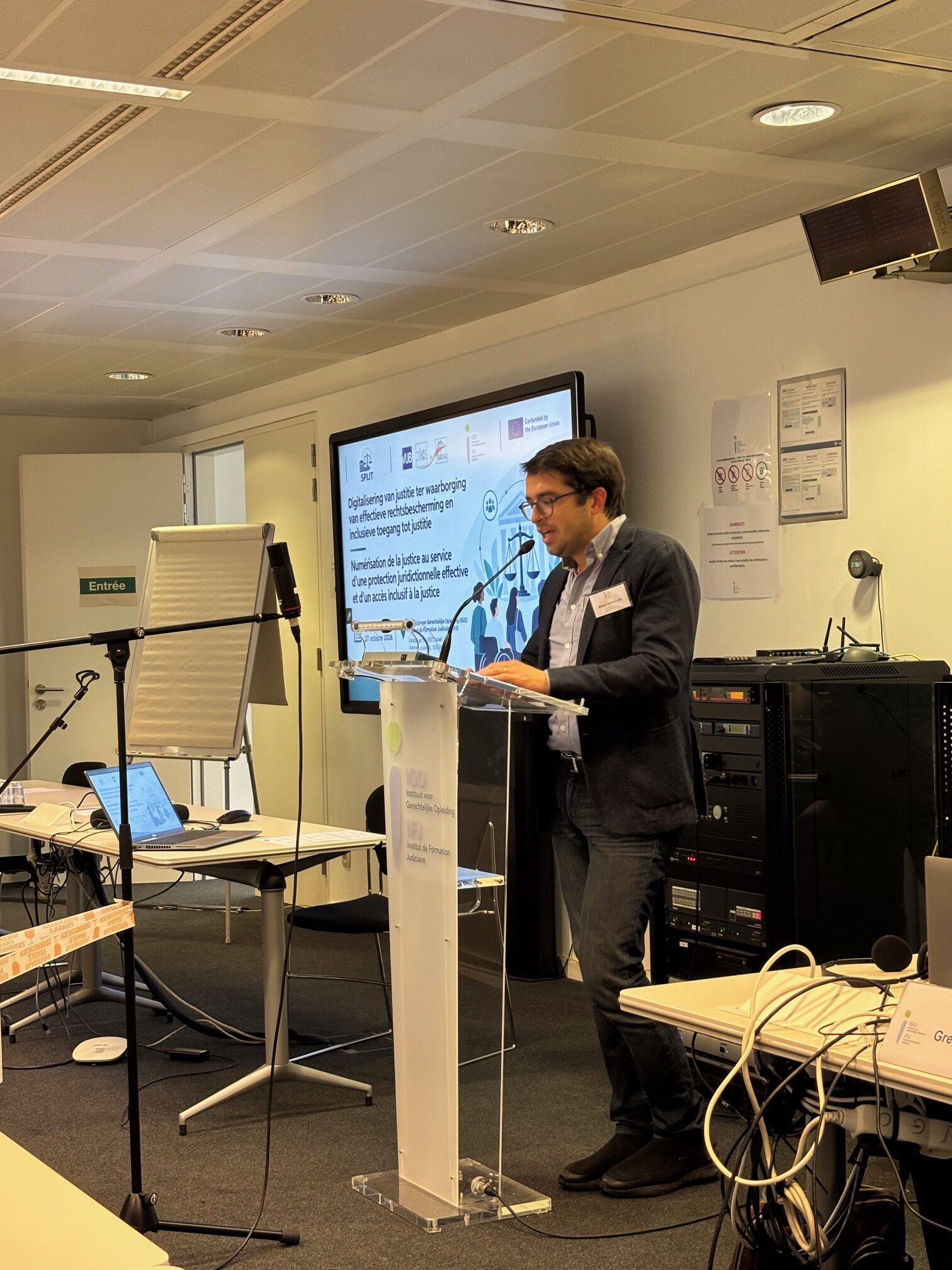
The day belongs to the SPLIT project, which stands for Strengthening Practice and Learning through Interactive Training. It is co-funded by the European Union and placed under the scientific direction of Prof. Marco Giacalone and Prof. Elisabeth Alofs. The program links the Vrije Universiteit Brussel, Radboud University, the Siracusa International Institute and ABCorporation to the initiative. Its title sets out its aim: digital justice that serves effective judicial protection and inclusive access to justice.
A day in six sessions
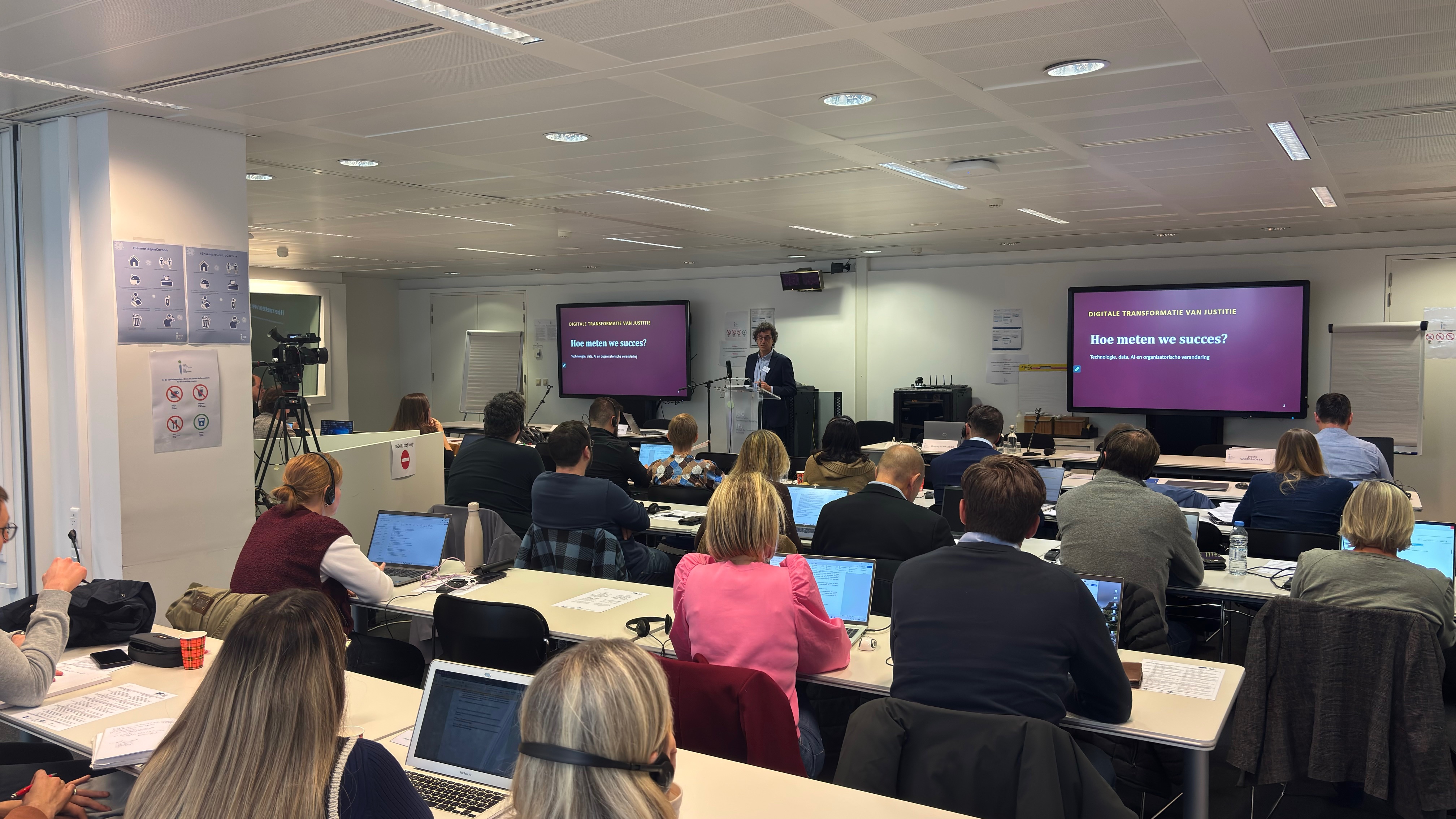
After registration, the morning began with a welcome from Umit Oral of the IGO-IFJ, followed by an introduction to the project by Prof. Marco Giacalone. The first session, led by Prof. Gregory Lewkowicz (ULB, SMART Law Hub, FARI), asked the basic question: which artificial intelligence technologies serve justice, and with what risks for fundamental rights? After the break, Philippe Vandaele, ICT liaison magistrate, asked how we can measure the success of the digital transformation of justice.
After lunch, the afternoon opened with a panel moderated by Prof. Giacalone on a simple but demanding question: does digitalization improve the quality of justice? Philippe Vandaele, Patrick Gielen, V. Gillet, Gregory Lewkowicz and Ljupcho Grozdanovski compared their views. Prof. Grozdanovski, a F.R.S.-FNRS researcher at ULiège who coordinates the Jean Monnet JUST-AI center of expertise, then showed how to strengthen inclusiveness through information on legal remedies in the digital age.
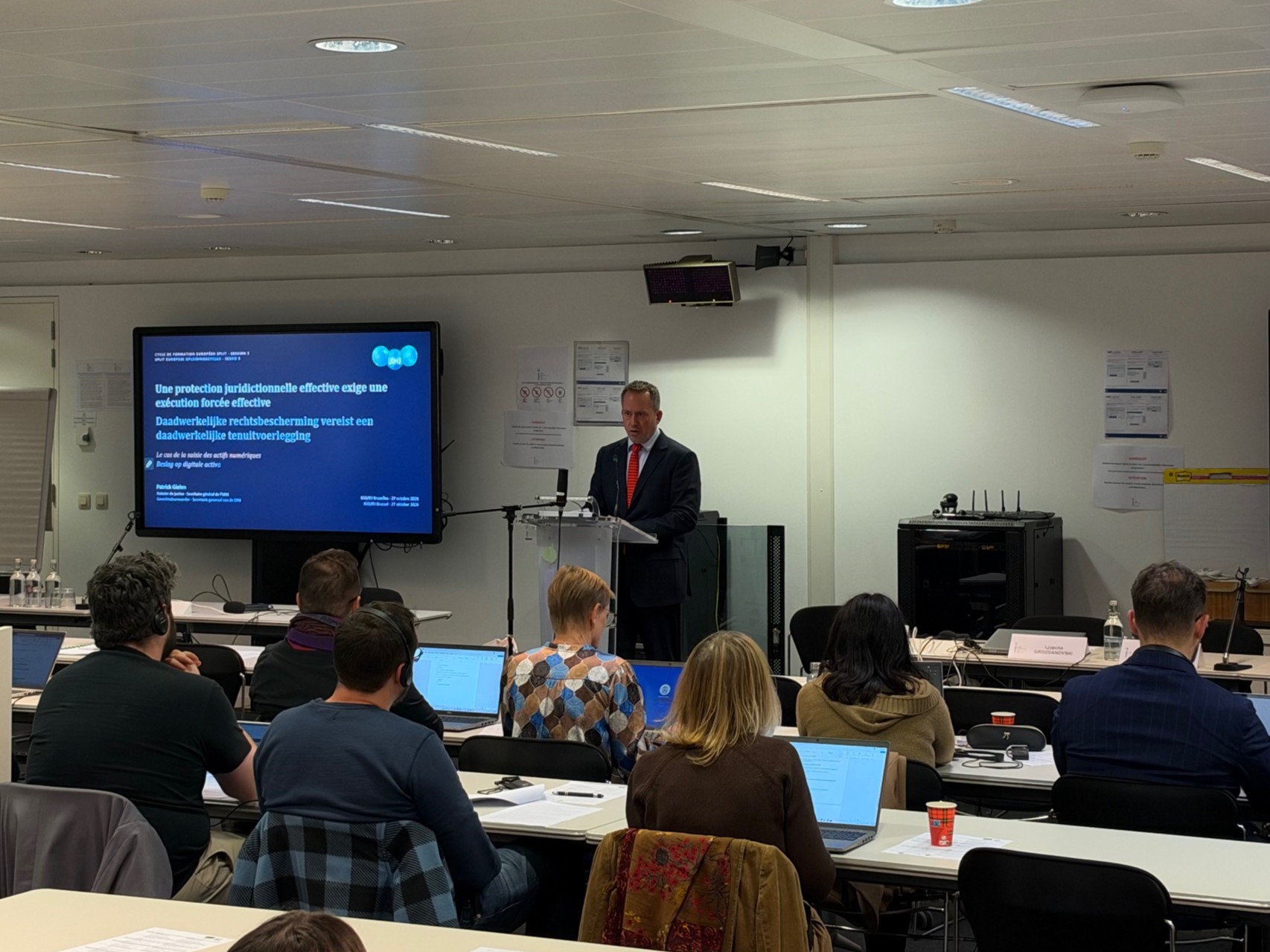
After a second break came our own case study in the fifth session: effective judicial protection requires effective enforcement, illustrated by the seizure of digital assets. The sixth and last session, given by Karolien Haese, lawyer and partner at DCH Avocats and founder and chair of the GCEA Academy, dealt with fundamental rights in a digitalized justice system, covering material, intellectual and qualitative access. The day closed with a short wrap-up and five minutes of feedback from participants.
Our message on artificial intelligence
In our contributions, we wanted to stress two points.
The first concerns data. The sheer volume of data is often presented as the main obstacle to using artificial intelligence in justice. In our view, this is a false problem. A machine that can process and check, in our view, some ten thousand billion data items per second is not held back by volume. Above all, the difficulty did not begin with artificial intelligence. The quality, accuracy and reliability of data were already at stake long before it, in the registers, files and databases that legal professionals have always relied on. Artificial intelligence makes the problem more visible, but it did not create it.
The second point is about responsibility. We put the question for a hybrid responsibility of artificial intelligence itself, one that does not rest only on those who design, deploy or use it. This responsibility would come with the creation of a global fund. For us, the trust that court users place in digital justice depends on this answer: when a system gets it wrong, someone must answer for the harm.
Why the UIHJ was there
The seizure of digital assets shows how much judicial protection depends on enforcement. A decision that cannot be enforced remains a promise. Judicial officers, at the heart of this chain, have every reason to take part in the debate on digital justice, and the UIHJ joins these training events with conviction.