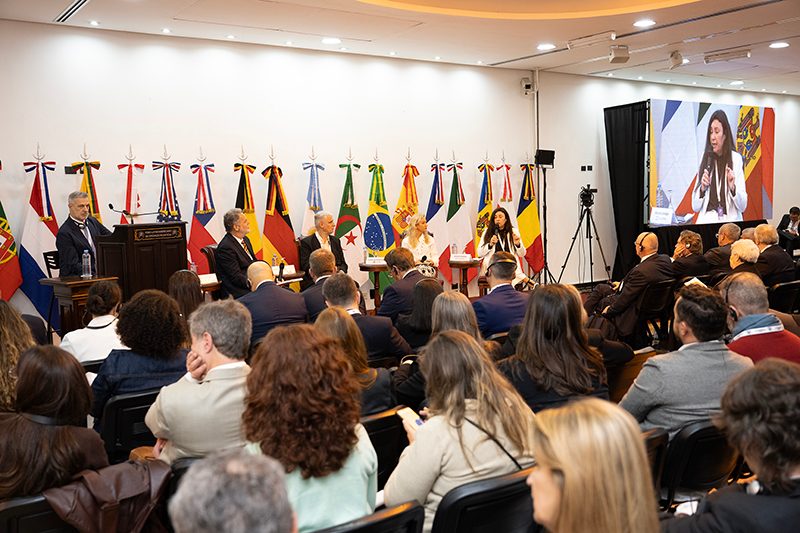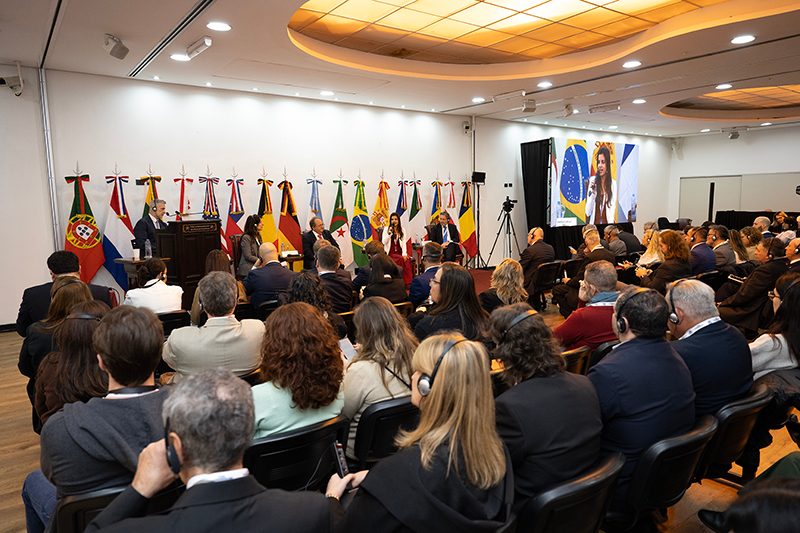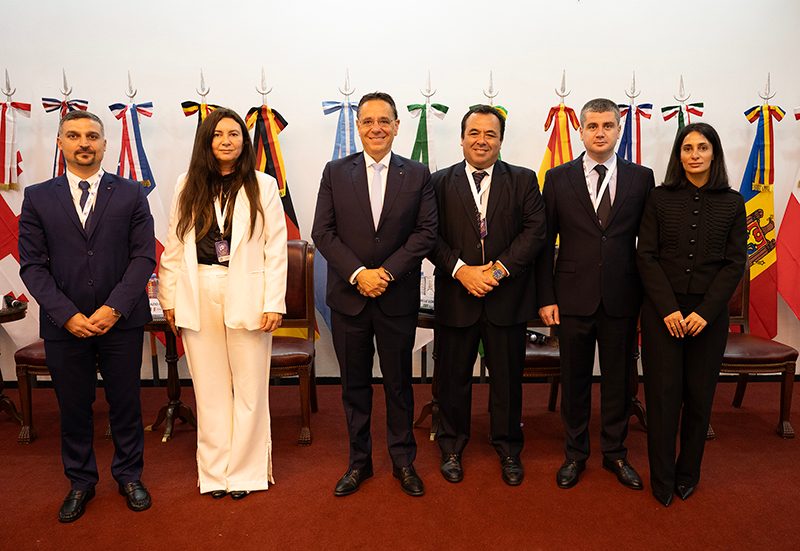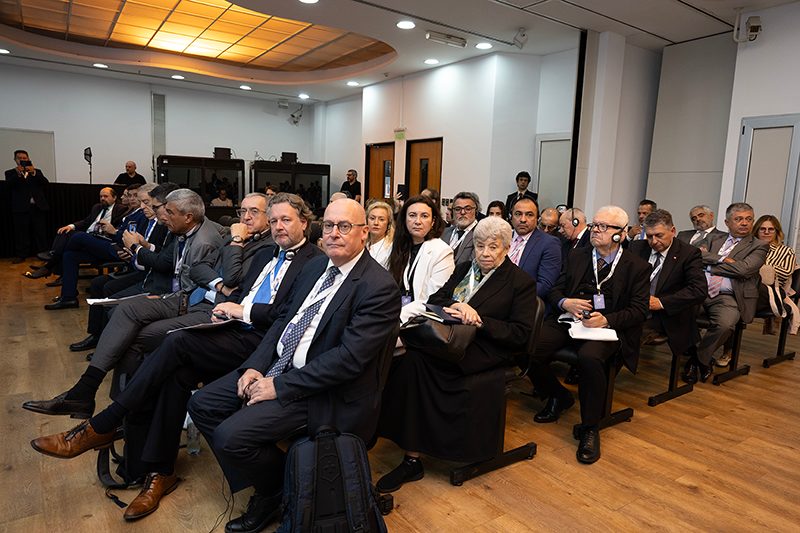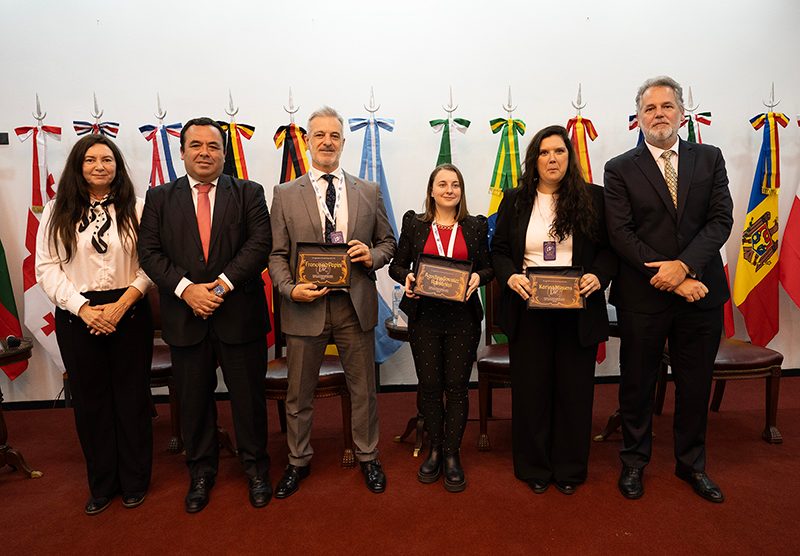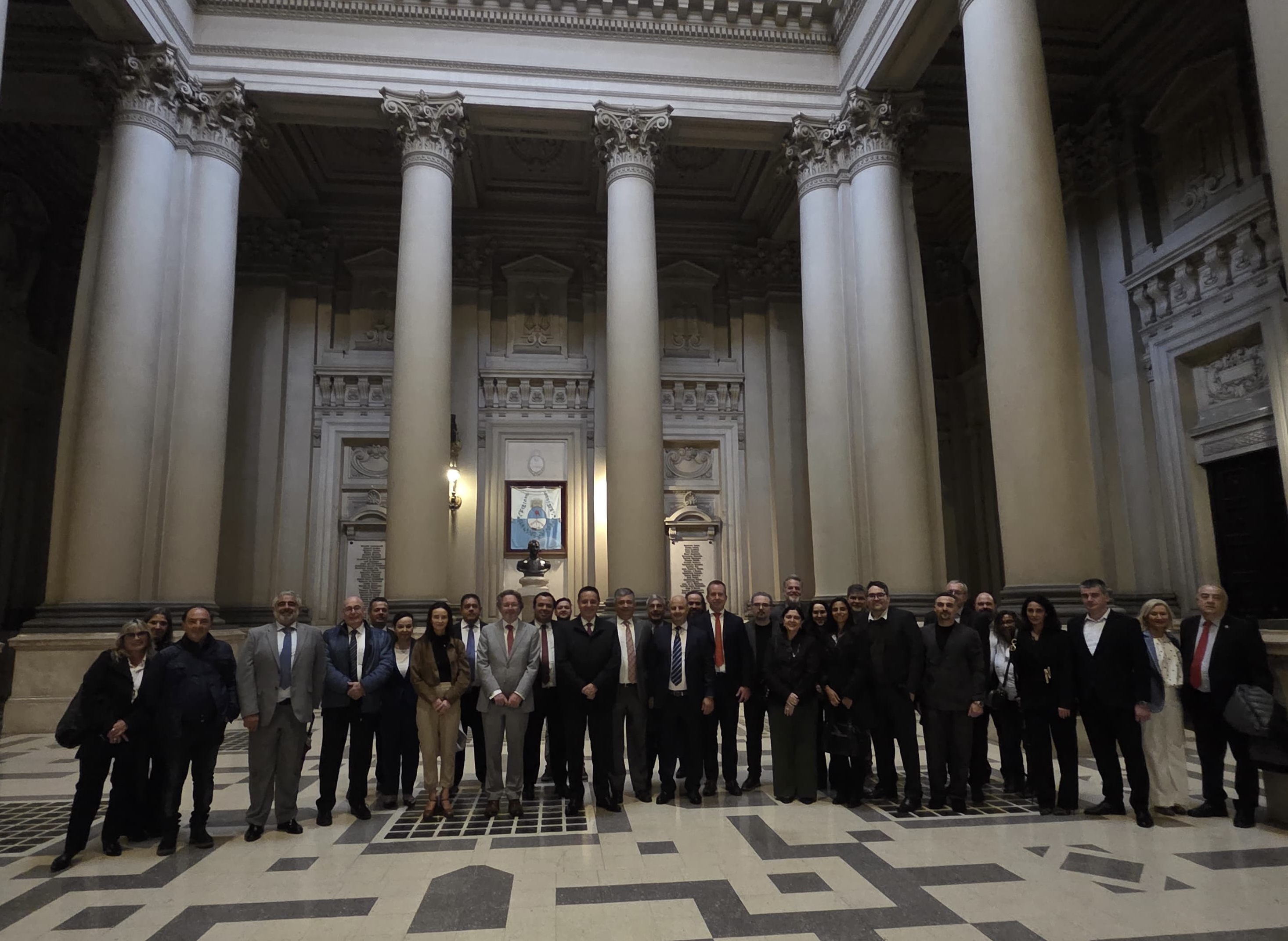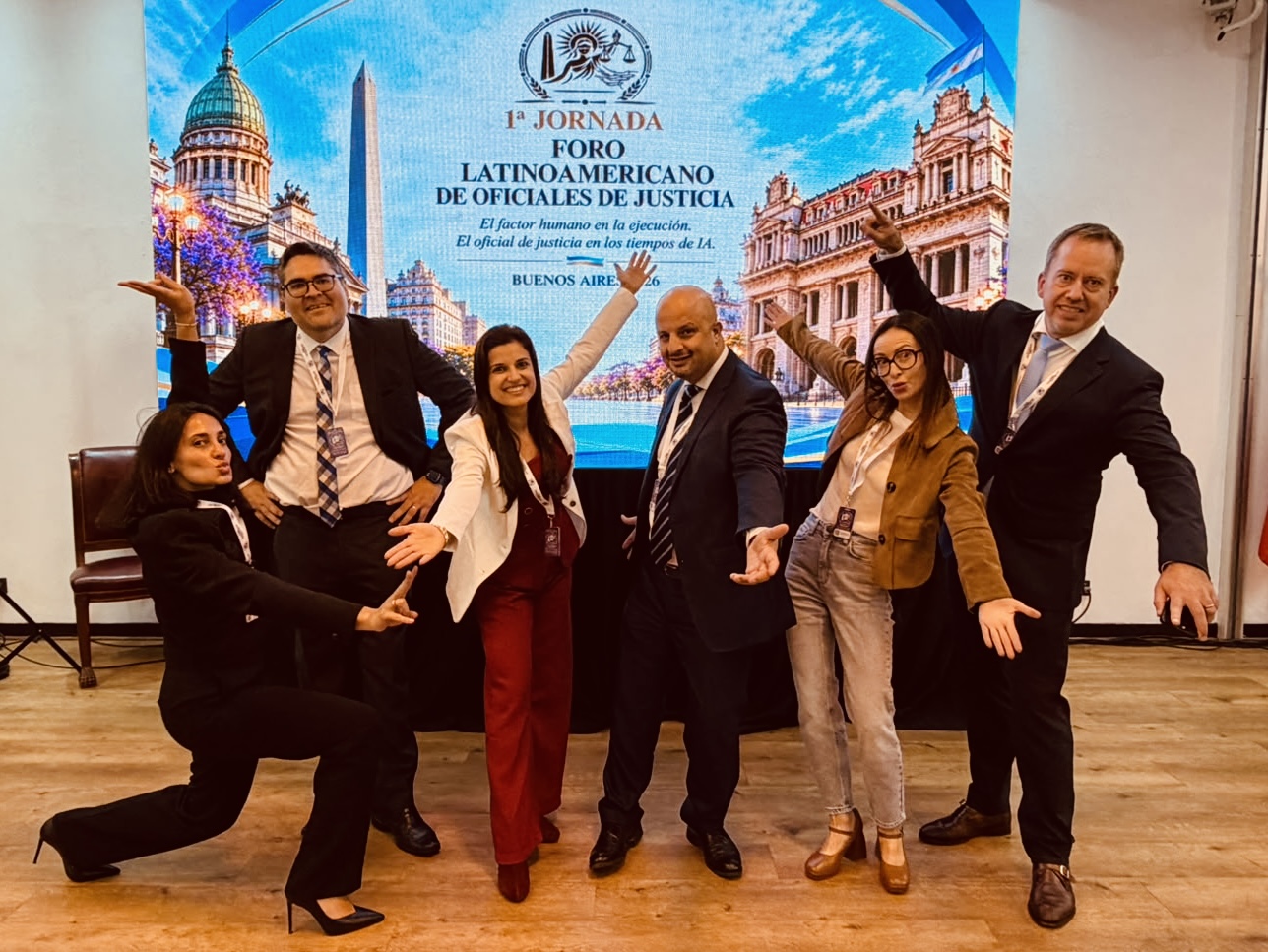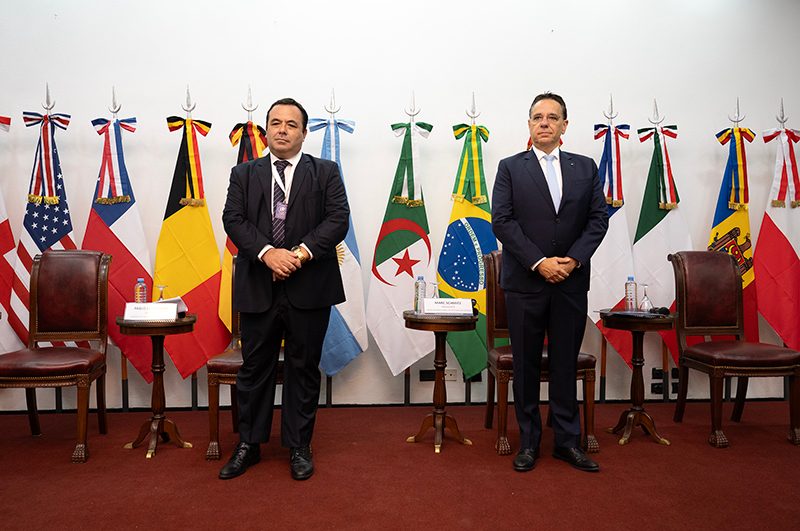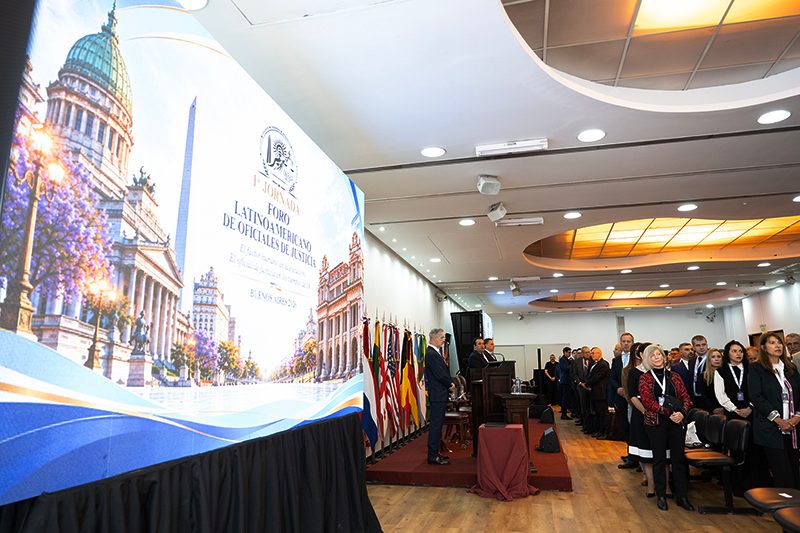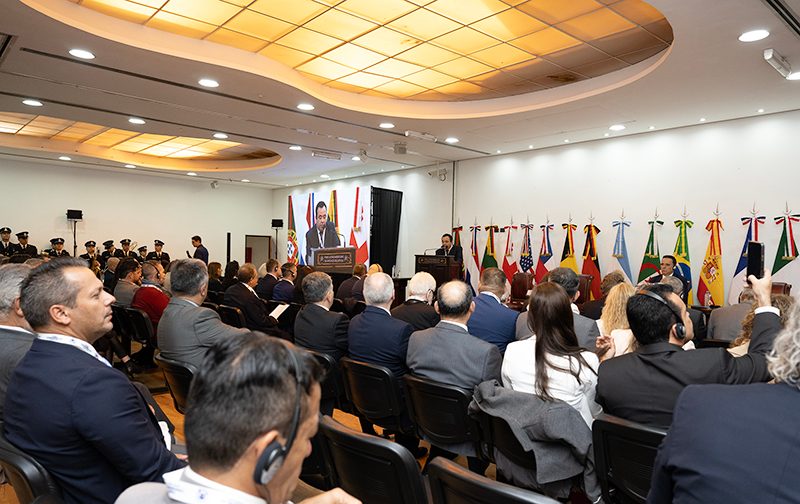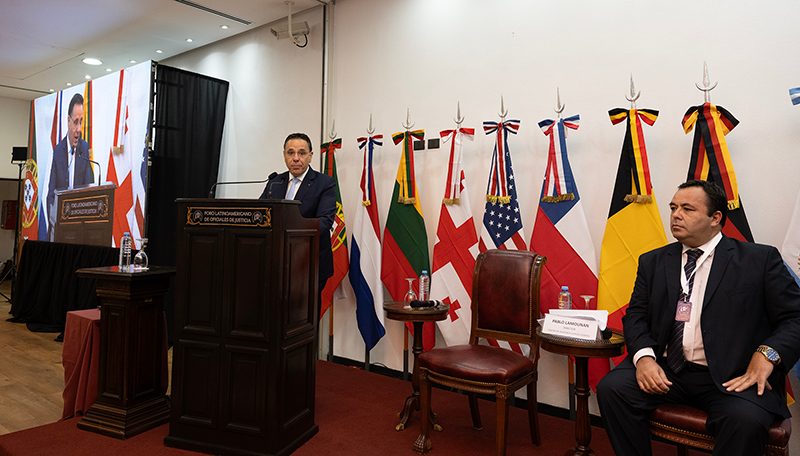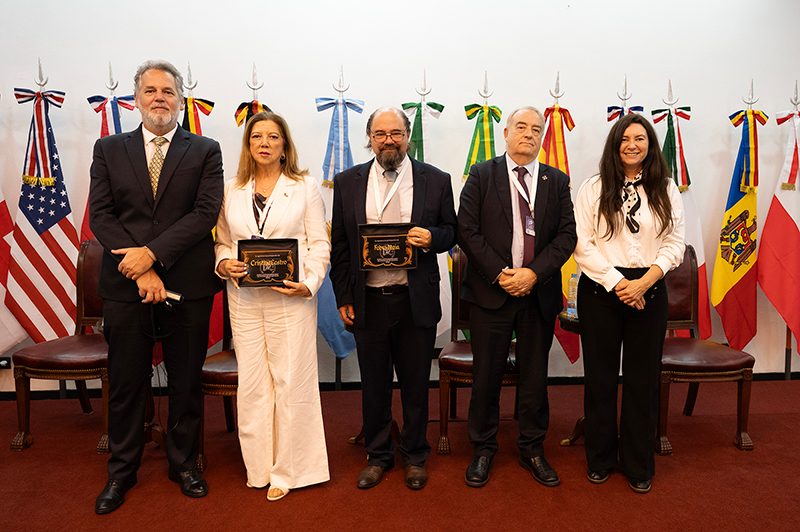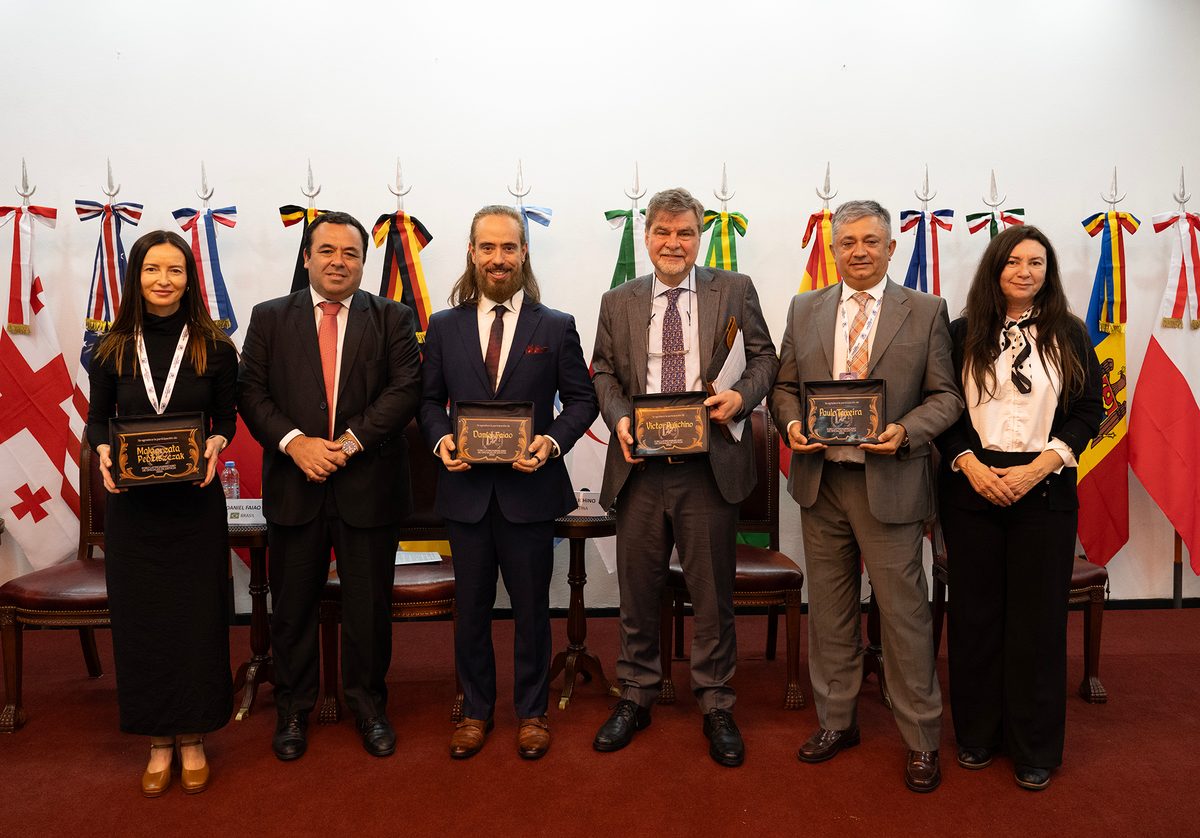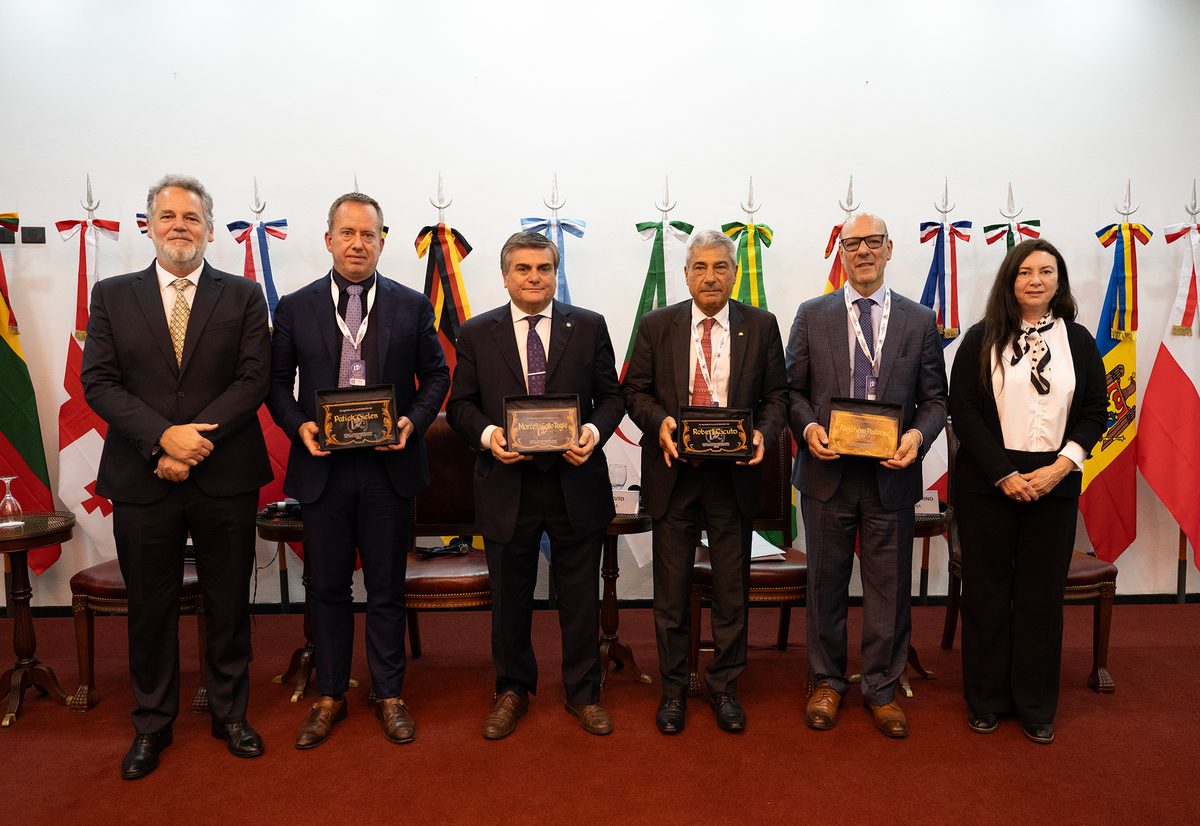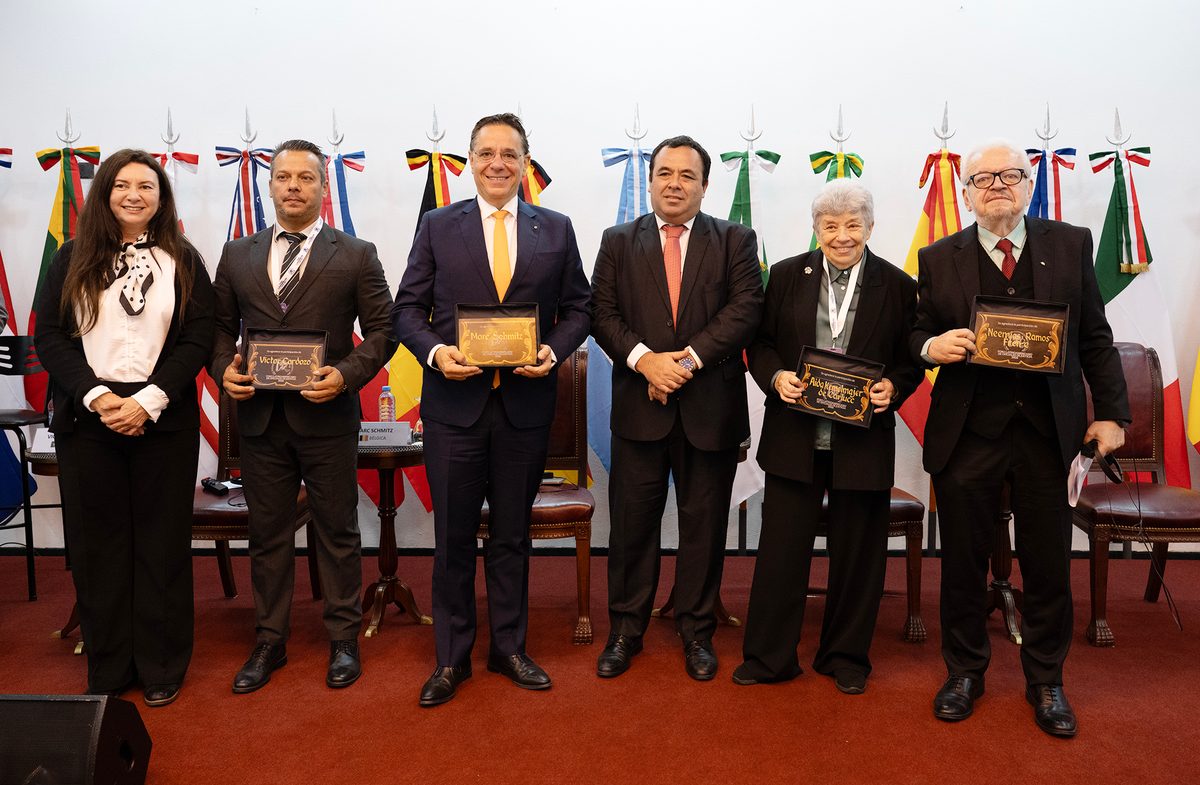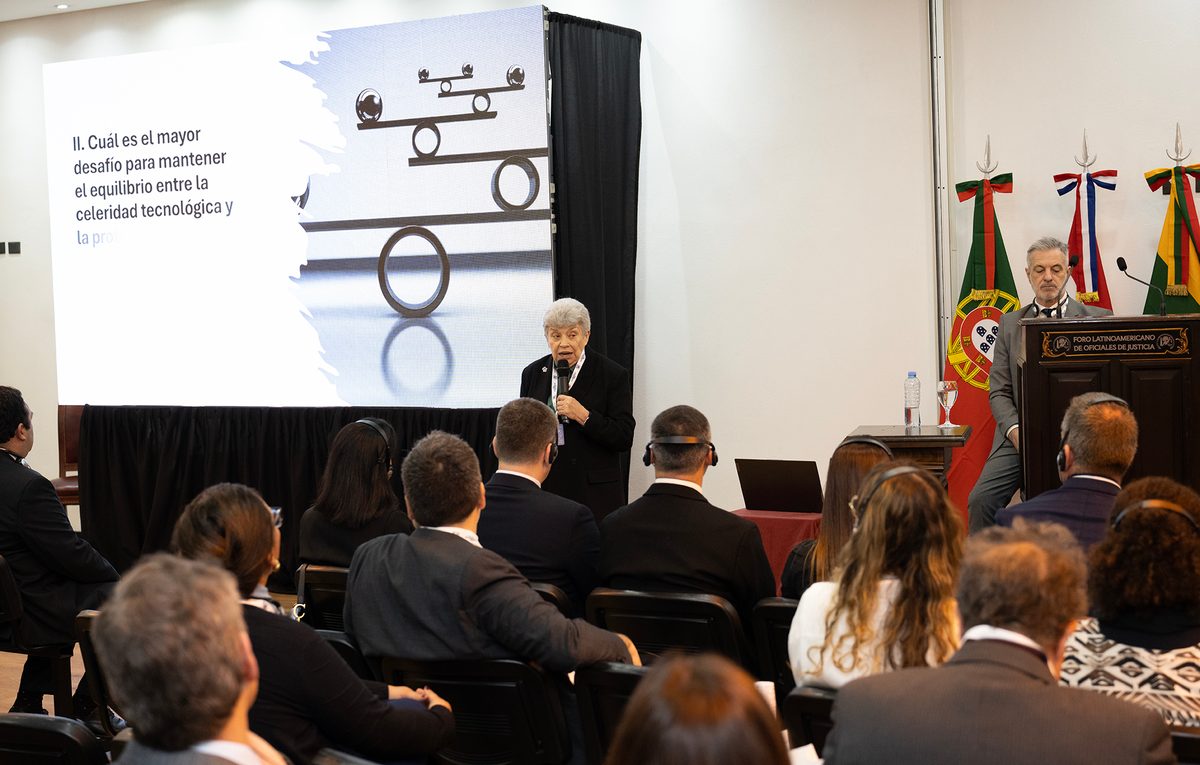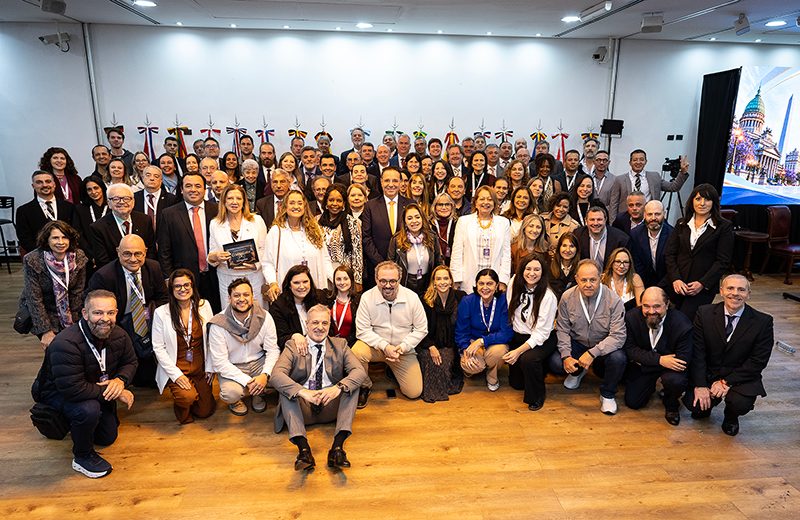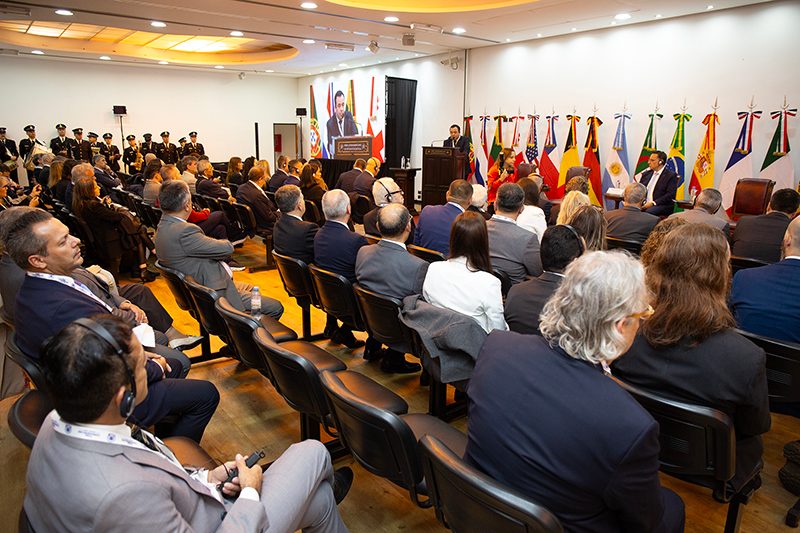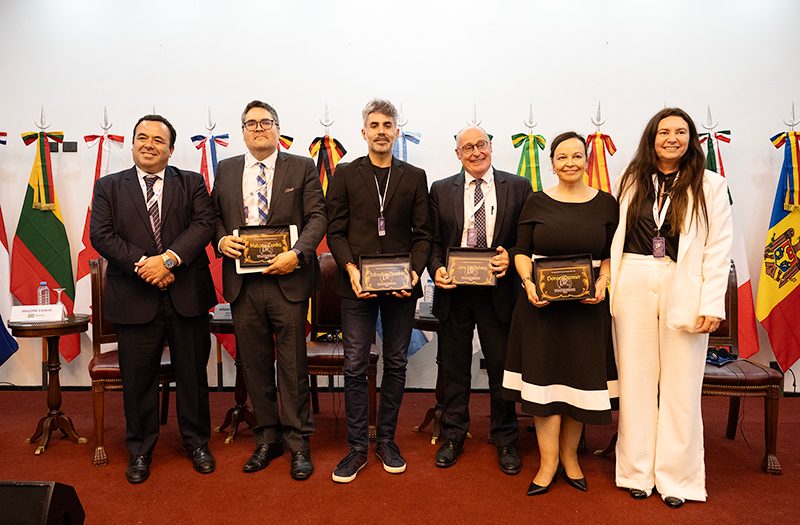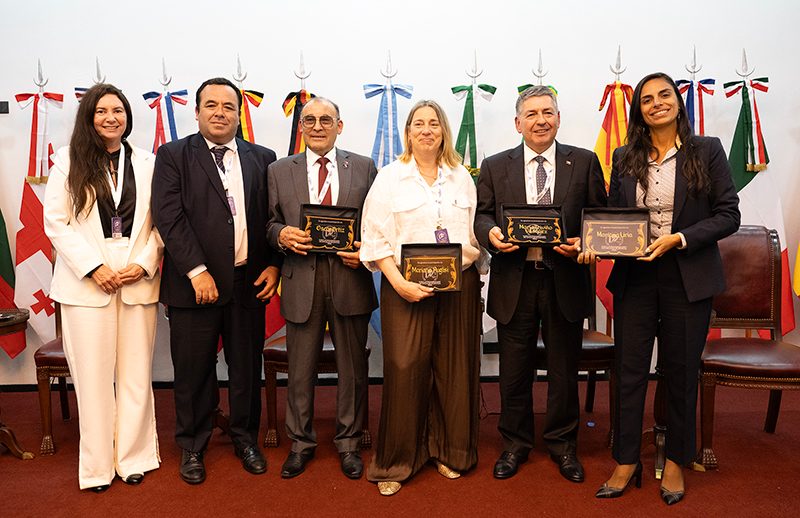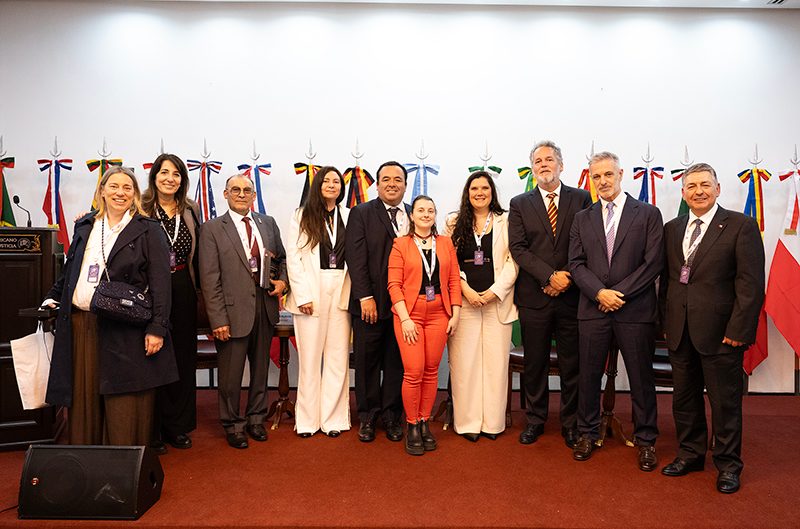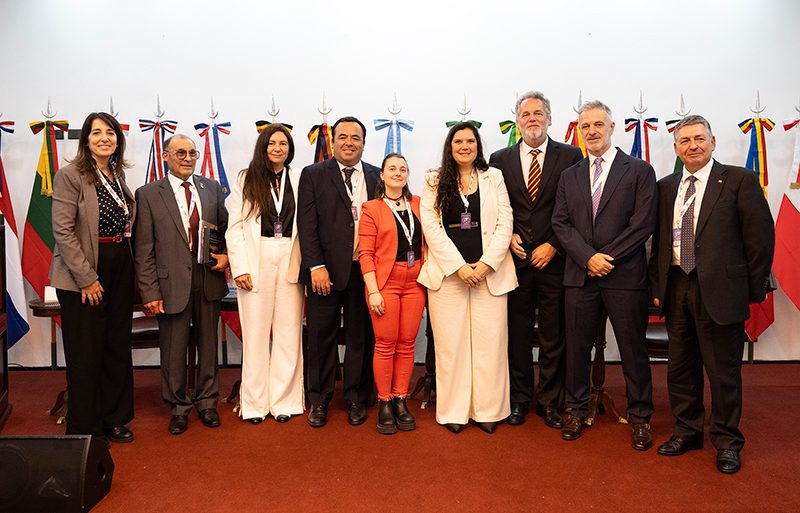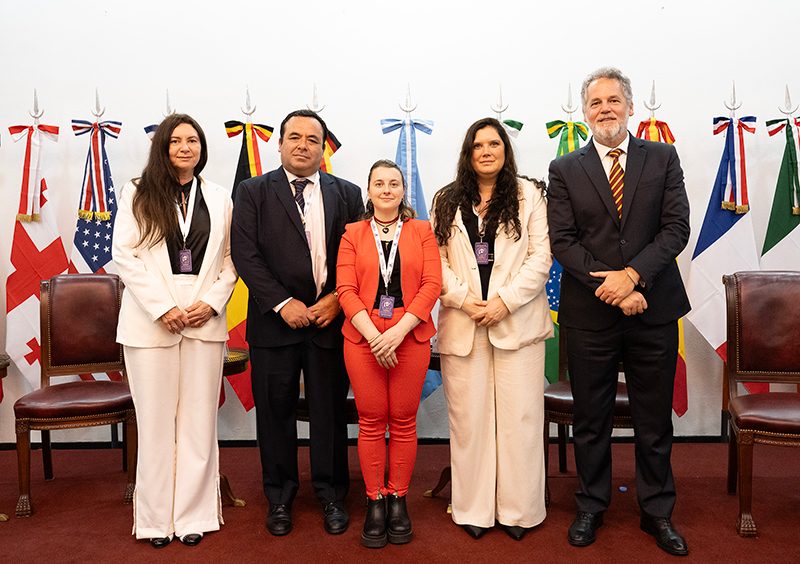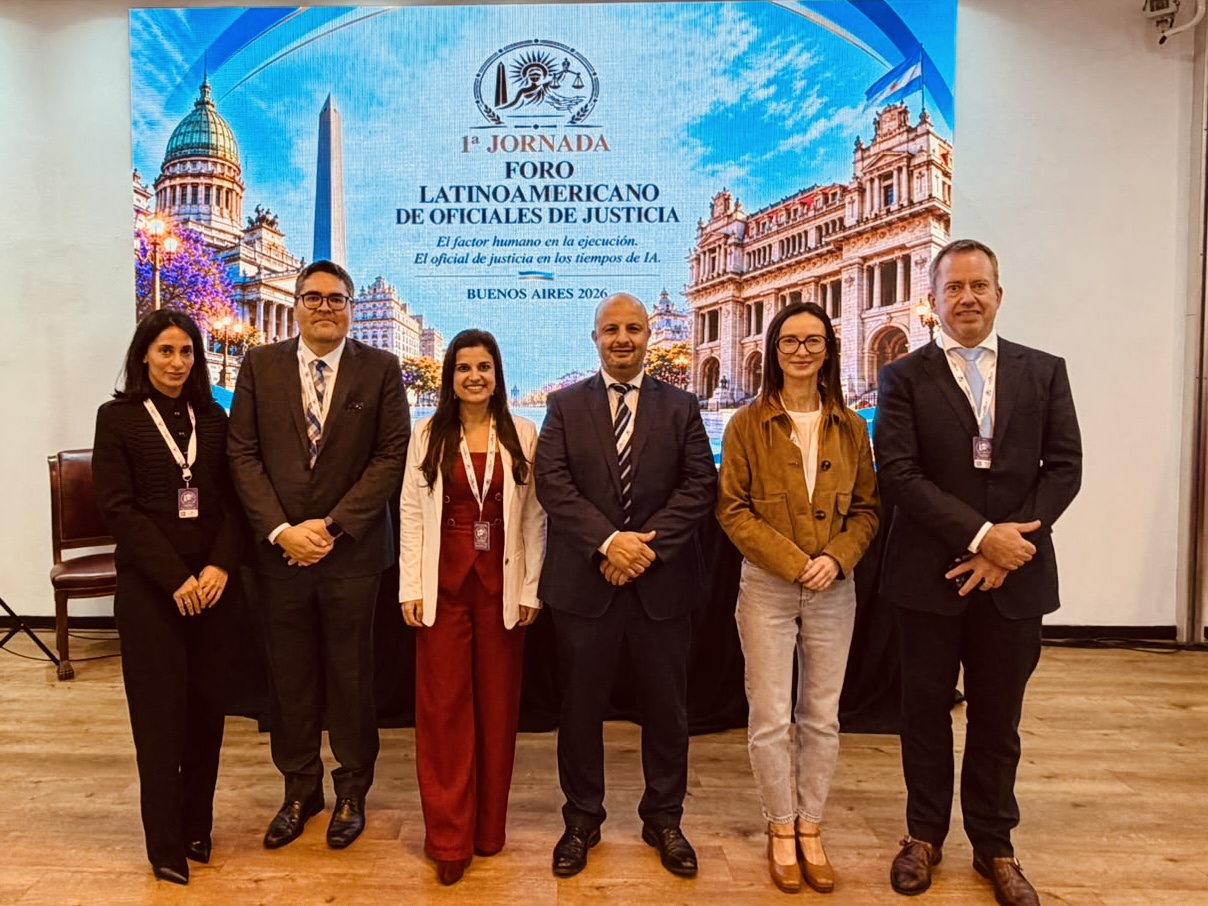
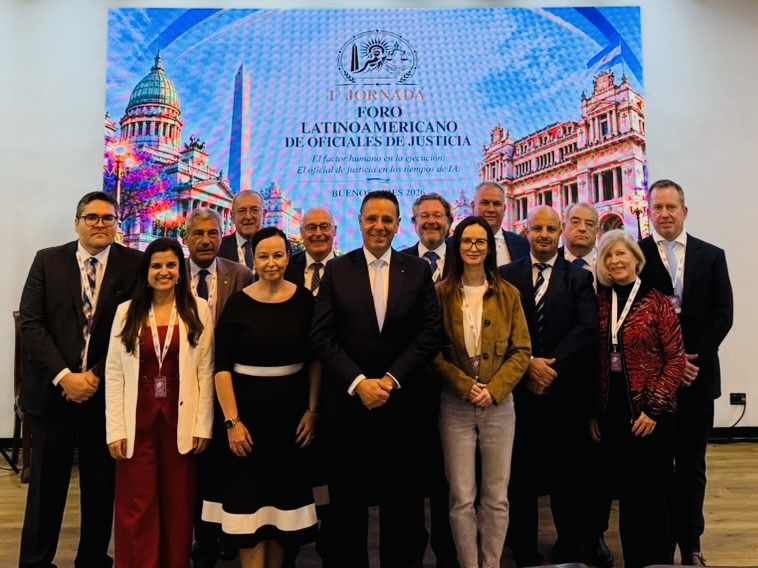
How can Judicial Officers remain at the heart of enforcement in the age of artificial intelligence? This question ran through the First Conference of the Latin American Forum of Judicial Officers (Primeras Jornadas del Foro Latinoamericano de Oficiales de Justicia), held in Buenos Aires on 8 and 9 October 2026 under the theme “The human factor in enforcement: the Judicial Officer in the age of artificial intelligence”. The conference was organised by the UIHJ and the Dirección General de Mandamientos of Argentina, with the active participation of the UEHJ.
The UIHJ was represented by Marc Schmitz, President, Jos Uitdehaag, First Vice-President, Jean-Pierre Herbette, Vice-President, Sue Collins, Vice-Secretary, Malone Cunha, Paulo Teixeira and Mohamed Reda Bougrine, Board Members, Patrick Gielen, Secretary General, and Luis Ortega, Advisor to the President. The UEHJ was represented by Marc Schmitz, also its President, Robert Cicuto, Treasurer, Oscar Jans, Secretary, and Doreen Donner, Małgorzata Pedziszczak and Paulo Duarte Pinto, Executive Committee Members.
Rethinking the role and powers of the Judicial Officer
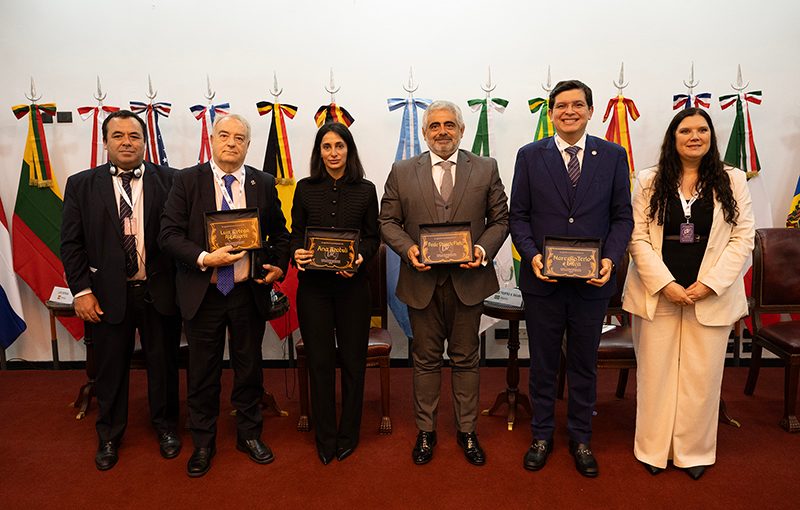
The first exchanges looked at the new challenges of enforcement and the expansion of Judicial Officers’ powers. Luis Ortega (Spain) led this discussion with Marcello Terto e Silva, member of the National Council of Justice (Brazil), Paulo Duarte Pinto (Portugal) and Ana Arabuli, in charge of public relations at the NBE (Georgia). The view from the continent itself came from Oscar Ortiz, Receptor Judicial (Chile), who moderated a panel on the challenges of the profession in South America with Mariana Liria (Brazil) and Dr. Mariana Puglisi (Argentina).
On the second day, Marc Schmitz and the Argentine jurist Dr. Aida Kemelmajer de Carlucci examined, with the moderator, the Judicial Officer as an enforcement agent, between the norm and global reality. Patrick Gielen then moderated a panel on the importance of the Judicial Officer in the judicial process, with Dr. Marcelo Gallo Tagle, President of the Latin American Federation of Magistrates, Professor Alejandro Pastorino, Argentine civil judge and professor, and Robert Cicuto (France).
The human side of enforcement
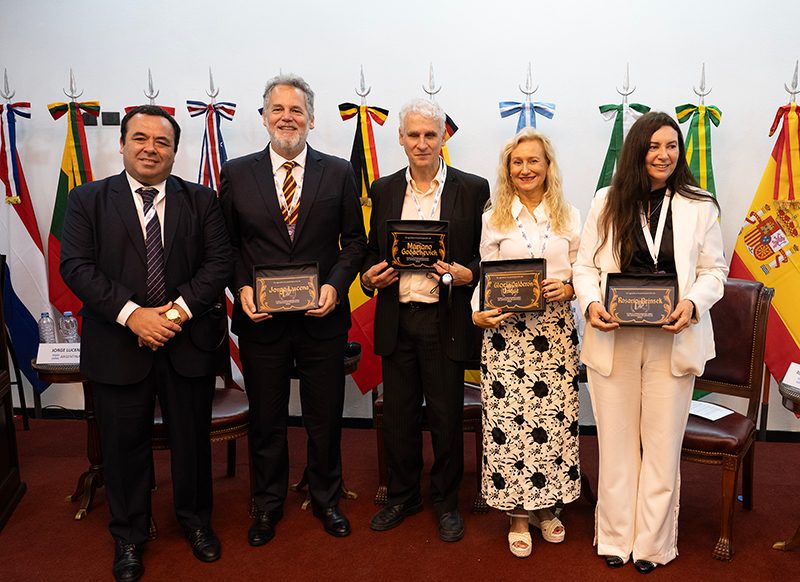
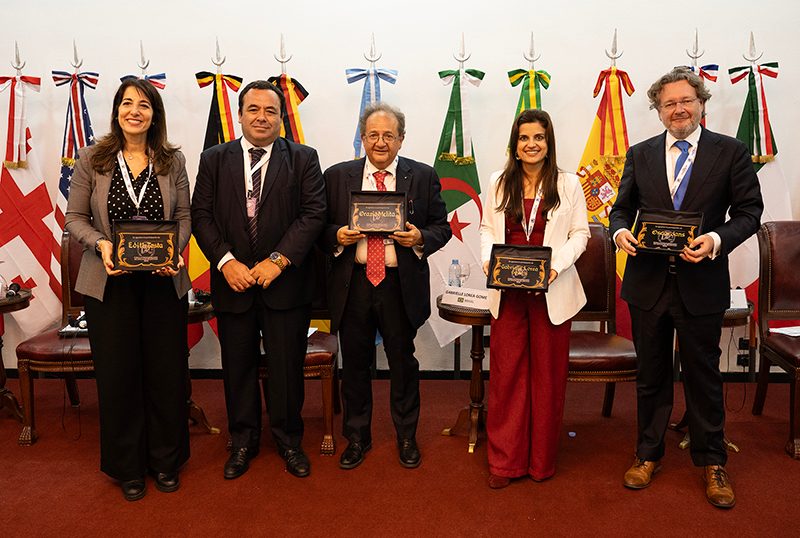
Several panels put people at the centre. Edith Testa (Argentina) led a reflection on the role of empathy, between the theory of justice and the theory of law, with Orazio Melita (Italy) and Gabrielle Lorea Gomes (Brazil). Jorge Lucena (Argentina) moderated a panel on vulnerability and access to justice, with Dr. Mariano Godachevich, lawyer at the Ministry of Justice (Argentina), Gloria Calderon Duque, Procurador de los Tribunales (Spain), and Rosario Brinsek, Director of the General Directorate of Writs (Argentina).
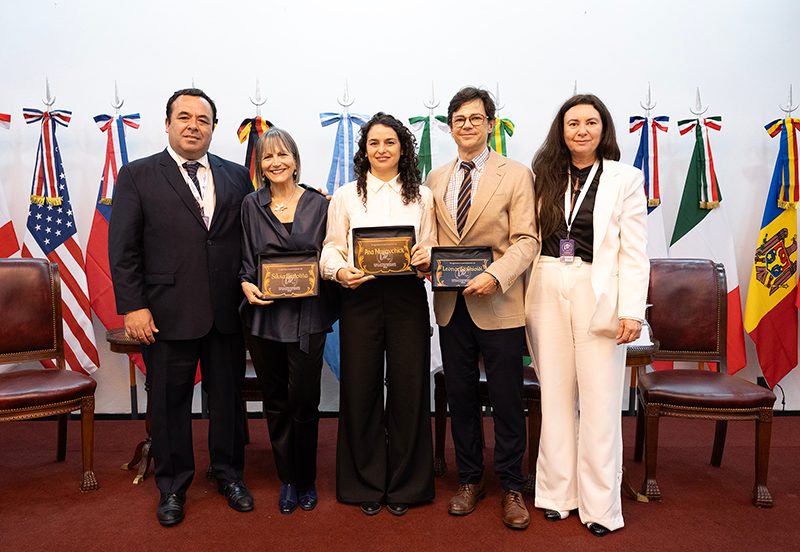
The health of those who enforce was also on the agenda. Psychologist Ana Muravchick led a panel on the mental health of Judicial Officers, covering burnout, violence in the line of duty and care strategies. She was joined by Dr. Silvia Bentolila, psychiatrist, and Dr. Leonardo Ghioldi, Dean of the Forensic Medical Corps (Argentina).
Artificial intelligence and new skills
Artificial intelligence was addressed head on. Malone Cunha (Brazil) moderated a panel on the ethical and legal limits of AI in enforcement, covering liability, algorithmic bias and data protection, with Dr. Sebastian Chumbita of the Supreme Court of Argentina and Jos Uitdehaag (Netherlands). The question of skills followed. Małgorzata Pedziszczak (Poland) led a panel on the continuous training of Judicial Officers and the technological, procedural and interpersonal skills they need in the 21st century, with Daniel Faiao (Brazil) and Victor Gustavo Pulichino (Argentina).
Towards Latin American integration
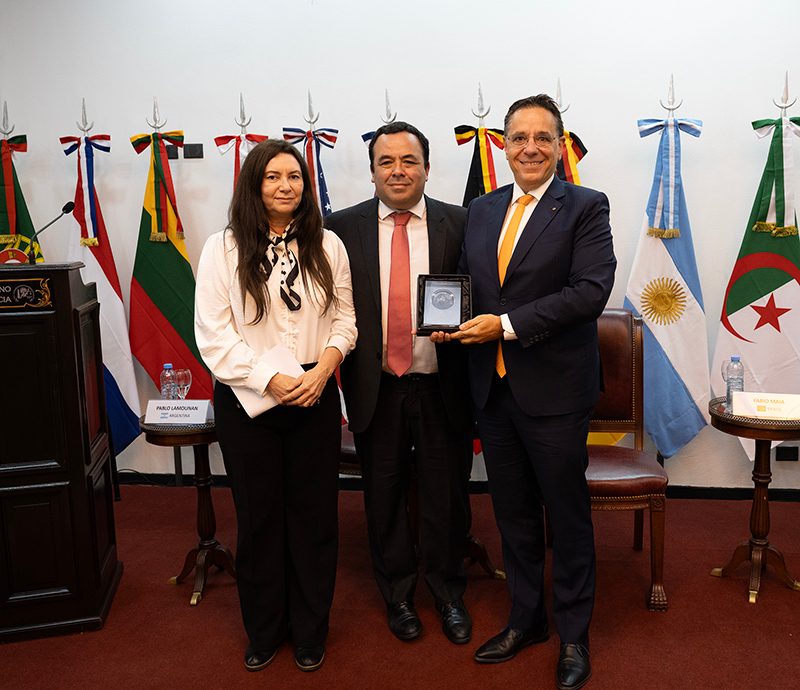
The conference closed with a panel on the Latin American integration of justice officials in a global world. Pablo Lamounan moderated it, with Cristina Castro, President of the Receptores (Chile), Fabio Maia, President of FENASSOJAF (Brazil), and Luis Ortega (Spain). This initiative is part of the UIHJ’s long-standing work on the American continent, and in South America in particular.
No effective enforcement, no effective justice
For the UIHJ and the UEHJ, the message from Buenos Aires is clear. A judgment without enforcement is justice that remains on paper. In the age of artificial intelligence, technology must assist human judgment, not replace it.
We warmly thank Pablo Lamounan and Rosario Brinsek for their invitation and for the quality of the event, as well as all the friends and colleagues we had the pleasure of meeting and meeting again in Buenos Aires.