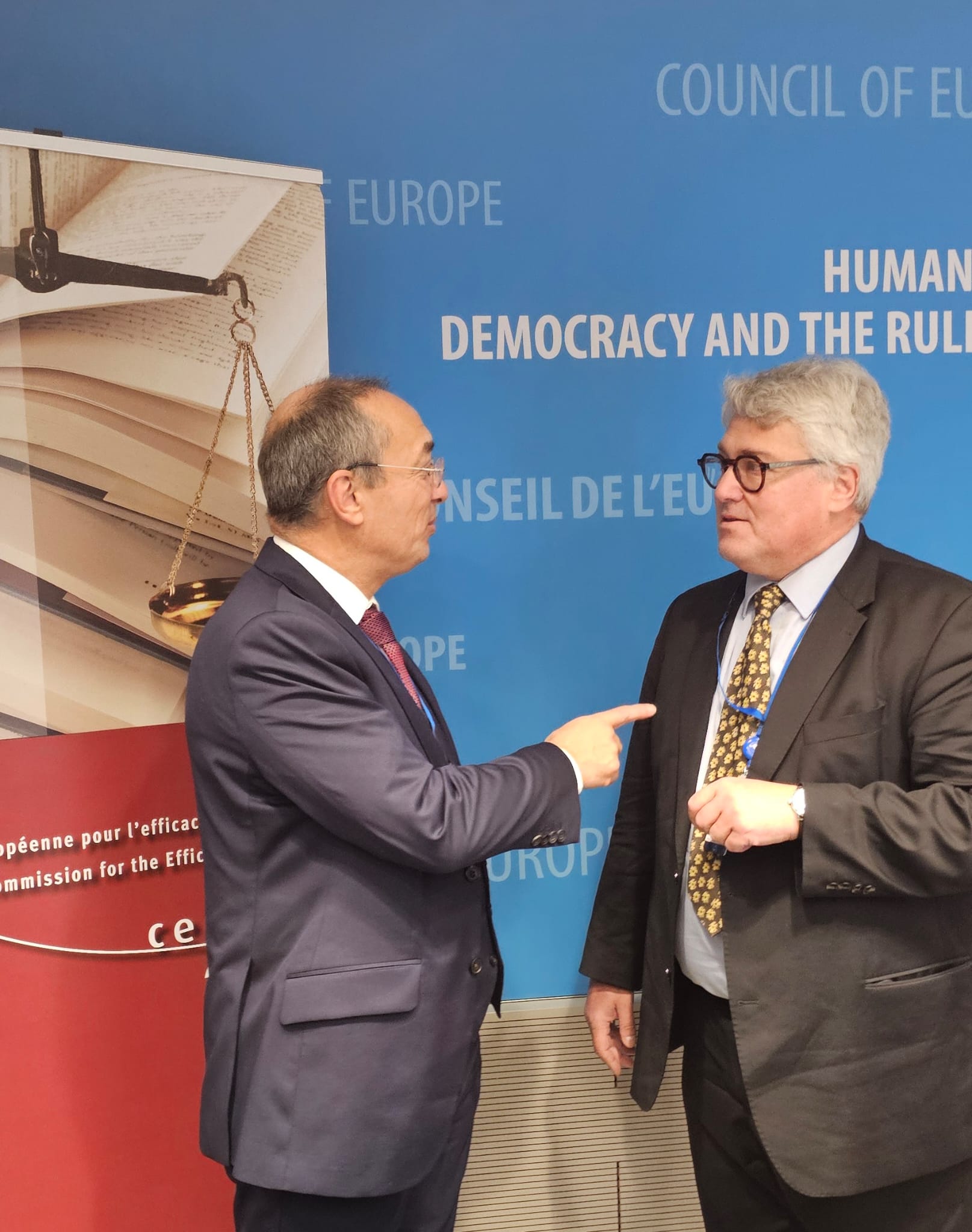
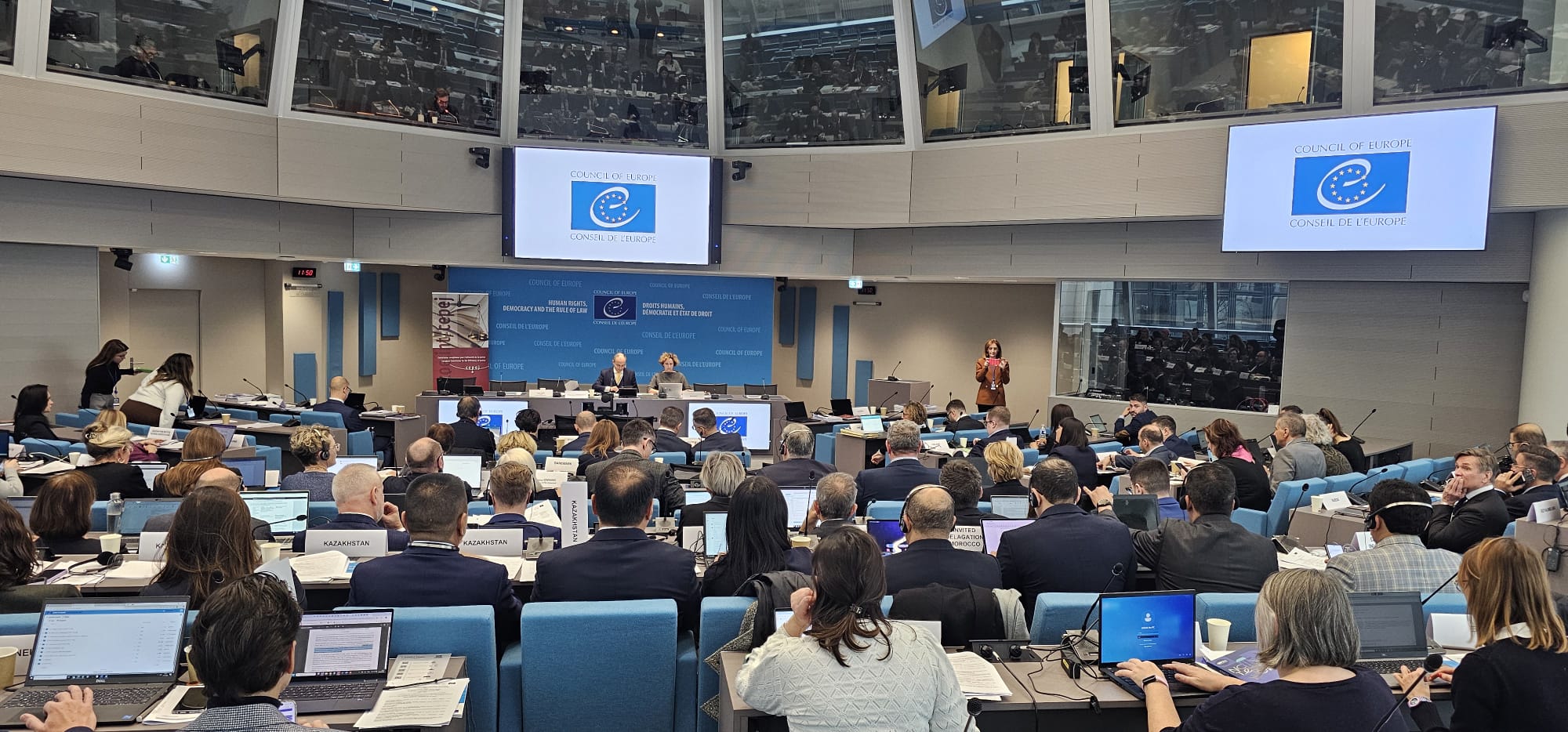
The UIHJ, represented by its former First Vice-President, Mathieu Chardon, participated in the 45th Plenary Meeting of the Council of Europe’s European Commission for the Efficiency of Justice of the (CEPEJ) at the Palais de l’Europe in Strasbourg on 4 and 5 December 2025.
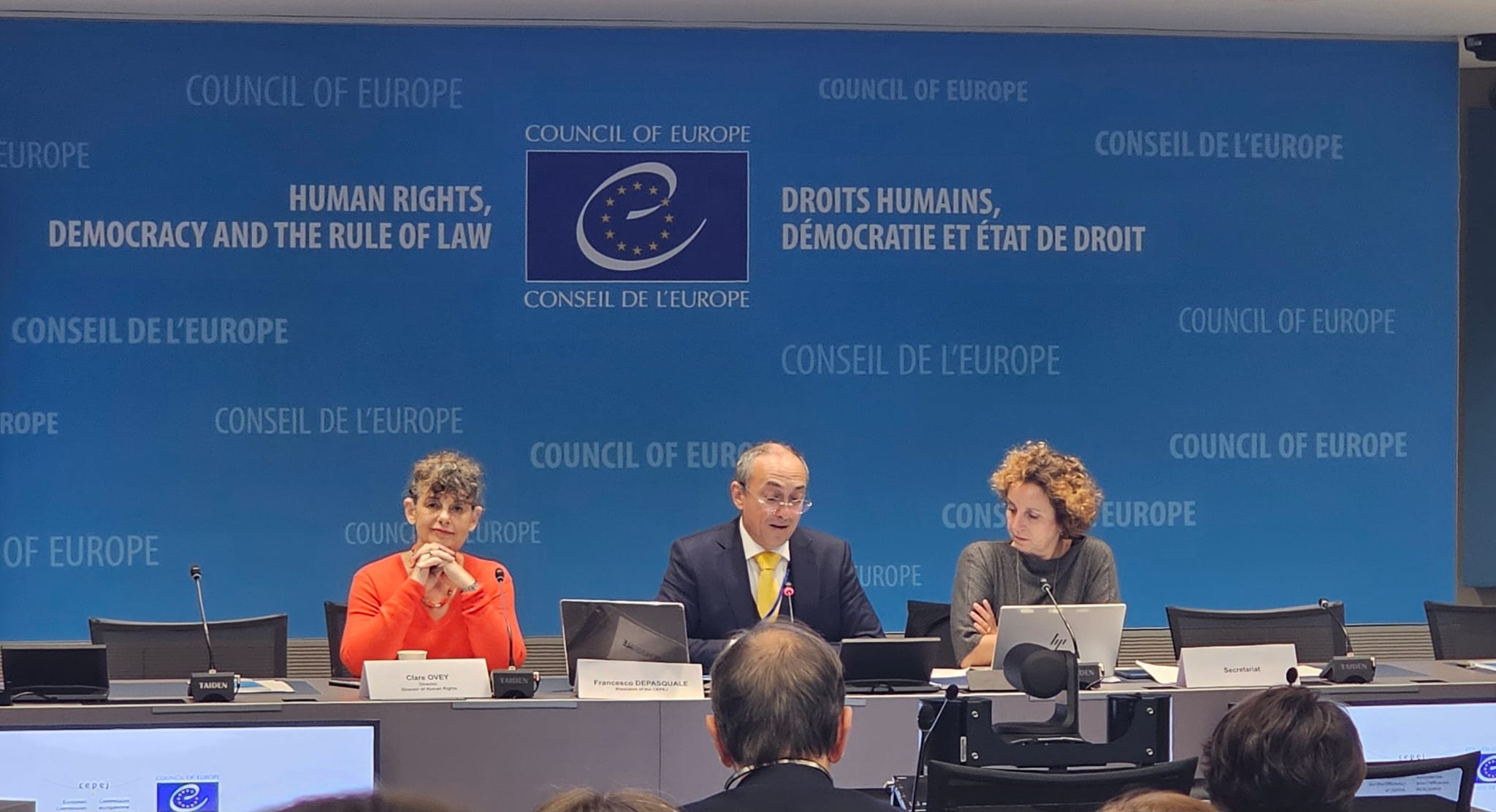
The meeting was chaired by Francesco de Pasquale, President of the CEPEJ, assisted by Muriel Décot, Secretary of the CEPEJ, and the entire CEPEJ secretariat.
Clare Ovey, Director of Human Rights at the Council of Europe, welcomed representatives from the 50 participating countries, the 12 observer members – including the UIHJ – the Robert Badinter Institute, the University of Strasbourg, the European Committee for Legal Cooperation (CDCJ), and the Consultative Council of European Prosecutors (CCJE). She noted that the discussions on important documents, tools, and guidelines that were to be submitted for adoption displayed the intense activity of the CEPEJ. She expressed her gratitude to all the members and the Secretariat for their continued commitment.
15 countries presented recent developments in the field of justice in Member and Observer States and the members since the 44th CEPEJ Plenary Meeting in June 2025: Albania, Belgium, Croatia, Georgia, Greece, Israel, Italy, Kazakhstan, Malta, Moldova, Morocco, the Netherlands, Slovenia, Turkey, and the United Kingdom.
Audun Hognes Berg (Norway) reported on the progress of the Judicial Reform Programme for the Western Balkans. This project, which began in 2022, will continue until 2027. It includes a regional project to improve the capacity for implementation of judicial reform Initiatives through Regional and European Judicial Community Networking, a regional analysis of civil procedure to identify which procedural practices in the region cause civil cases to last so long before they are completed, and what can be done, and a pilot project for the court of Podgorica (Montenegro) on implementing measures to enhance civil proceedings.
Established in 2005 by the Council of Europe and the European Commission, the Crystal Scale Prize is a biennial competition organised by the CEPEJ to discover and highlight innovative and effective practices in the functioning of the justice system, judicial procedures, and the organisation of courts. The 2025 Crystal Scale Prize awarded in October recognised an initiative from the Netherlands supporting people in debt: “Schuldenfunctionaris/Debt Officer“. The project identifies involves identifying people with debt problems for early support, by appointing debt officers within the courts to help debtors and identify potential problems at an early stage. It was presented by its authors, along with the two other projects that received a special mention: “Support Centre for Conservatorship” (Belgium) and “Hyper-automation of Order for Payment Procedures in Justice” (Spain).
A documentary film about Ukraine, “In Your Name: Justice in Times of War”, was screened. The Ukrainian representative stated that it was produced to show that, in the darkest hours, maintaining the public service of justice is not only a duty but also delivers a message of hope and resilience.
The 2026-2029 CEPEJ Action plan (Valetta Action Plan): “Strengthening the Rule of Law by Improving Trust in Justice Systems”, and the 2026-2027 Activity programme of the CEPEJ were presented by Francesco Depasquale. These two key documents were adopted following discussions. They will be available on the CEPEJ website.
Acknowledging that judicial time management is only one aspect of the efficiency of justice, the plan includes expanding the scope of the CEPEJ-SATURN working group, which is being transformed into a working group on the efficiency of judicial procedures (CEPEJ-WG-EFF). This group will be instructed to develop means of analysis and evaluation of the work carried out within judicial systems as well as tools with a view to enhancing, within Member States, the efficiency of justice and enabling member States to implement policies aiming to prevent violations of Article 6 of the European Convention on Human Rights, and in particular the right to a fair trial within a reasonable time. He will also deal with issues related to the enforcement of court decisions. The possible revision of existing CEPEJ tools on enforcement of judicial decisions is among the many missions of the CEPEJ-GT-EFF mentioned in the 2026-2027 activity programme.
Alice Hamilton, representative of the European Union Agency for Fundamental Rights (FRA), presented the ongoing study being conducted by this agency in several EU Member States on: “Digitalising Justice: A fundamental Rights-based Approach”.
Maria-Giuliana Civinni (Italy) discussed the progress of the Working Group on Cyberjustice and Artificial Intelligence (CEPEJ-GT-CYBERJUST), which she chairs, with the assistance of the Secretary of the working group, Daniel Schmidt. She detailed the draft guidelines on the use of generative artificial intelligence in courts, as well as the draft concept for a technology curriculum for judges. Cooperation activities in the field of Cyberjustice and AI in Albania were covered by CEPEJ project manager Anastasiia Nohovitsyna.
Jaša Vrabec (Slovenia) presented the ongoing work of the CEPEJ Working Group on the Evaluation of Judicial Systems (CEPEJ-GT-EVAL), which he chairs, in collaboration with Christel Schurrer, CEPEJ Vice-Secretary and Secretary of the CEPEJ-GT-EVAL. They discussed the evaluation cycle reform and the preparation of the CEPEJ evaluation report on European judicial systems, 2026 cycle (2025 data). They also mentioned, along with Enes Sehic, CEPEJ Project Manager, the European Union Justice Scoreboard, the Western Balkans Dashboard, and the Justice Dashboard EAP (Eastern Partnership countries). Cooperation activities on evaluation of judicial systems in Moldova were presented by Leonid Antohi, Project Coordinator, and Victoria Palanciuc, Senior Project Officer. Halima El Joundi and Roberta Battista, project coordinators, discussed the progress of the MAJUST cooperation project between CEPEJ and Morocco.
Giacomo Oberto (Italy) presented the ongoing work of the Working Group on Judicial Time Management (CEPEJ-SATURN), with the assistance of this Working Group’s secretary, Eva Konecna. He discussed the case-weighting tool, the study on workload measurement in judicial systems, the tool to analyse the timeframes according to the steps of the civil procedure, and the Database of backlog reduction practices. Cooperation activities related to judicial time management were presented by Stéphanie Lefeuvre, Project Manager in Kosovo*, Roberta Battista, representing Greece, and Laetitia Dimanche, Project Manager for Programme V in Malta.
João Arsenio De Oliveira (Portugal), President of the Working Group on Quality of Justice (CEPEJ-GT-QUAL), whose secretariat is managed by Clémence Bouquemont, also Deputy Secretary of CEPEJ, addressed the Checklist on access to justice, child inclusive mediation, interpretation in judicial proceedings, and the revision of the Handbook for conducting satisfaction surveys among court users. Cooperation activities related to the quality of justice were presented by Vafa Rovshanova, Senior Project Manager for Azerbaijan, Ushangi Bakhtadze, Project Manager for Georgia, Laetitia Dimanche, Project Coordinator for the Programme V in the Arab States, and Anastasiia Nohovitsyna and Enes Sehic for Bosnia and Herzegovina.
Seçkin Koçer (Turkey), President of the ad hoc working group on work-life balance (ad hoc CEPEJ-GT-WLB) outlined ongoing activities, particularly about its contribution to the guidelines on work-life balance for judges.
Finally, the CEPEJ Observer members gave shared their ongoing activities of interest to the CEPEJ. Mathieu Chardon stated that the 10th anniversary of the Global Code of Enforcement was celebrated during the UIHJ Permanent Council meeting on 20 November 2025. It will be updated for the 26th International Congress of Judicial Officers, to be held in Lisbon from 5 to 7 May 2027. He welcomed the potential revision of the CEPEJ Guidelines on Enforcement, a move supported by the UIHJ, and the inclusion of the enforcement of court decisions within the CEPEJ-GT-EFF regular activities. He emphasised the importance of these guidelines, which constitute a standard not only at the European level but also globally, and confirmed that the UIHJ stands ready to participate in future CEPEJ work and to provide its expertise.