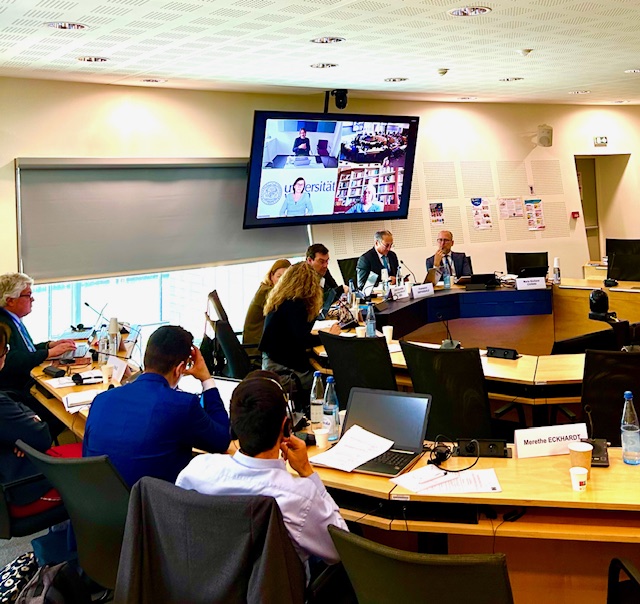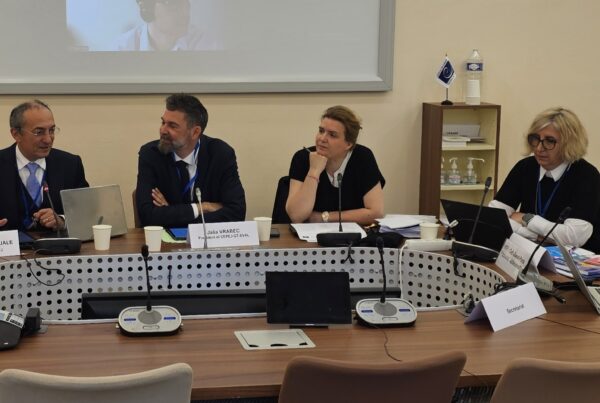

The working group on Cyberjustice brings together international experts, legal practitioners, academics, and representatives from international organisations to discuss technological advancements and ethical challenges posed by the increasing use of AI and other technical solutions in the legal field.
The very packed agenda was launched by Francesco Depasquale, CEPEJ President, remarking that AI is taking the world by storm, thus making the work of this group so very relevant and of critical importance. He noted that the next plenary meeting of CEPEJ will take place in Malta in October 2025, when the full CEPEJ commission will re-set their plan of action for the next four years.
Numerous highly technical draft position papers had been pre-circulated in advance of the meeting which required to be considered and debated by the working group, in the course of the two-day conference.
Specific projects were referenced, including the issue of guidelines on Video Conferencing in Judicial Proceedings, which was extensively debated by the group of experts. Other fascinating topics for consideration included a training curriculum to support judges and other court personnel in adapting to the use of artificial intelligence in their day-to-day activities.
The group also benefited from a fascinating online intervention from a representative from the Kazakhstan justiciary, highlighting that all court processes have been fully digitized post-COVID, and where appropriate, artificial intelligence has already been effectively deployed to support the work of their judges and court staff.
Several other position papers were explored, focusing on the emerging impact of artificial intelligence, specifically in relation to Generative AI. It was affirmed that any such technologies must assist judges without compromising relevant safeguards and ethical standards. It is intended that CEPEJ will in due course provide a practical guide for courts on the use of artificial intelligence.
The second day of the conference commenced with a joint session of both CEPEJ-GT-CYBERJUST and CEPEJ-GT-Qual, as there were specific topics which fall within the scope of both groups. This included feedback on the use of a CEPEJ assessment tool on IT projects and a study of the efficacy of translation and interpretation services in judicial proceedings.
The group was joined online by experts from Sweden and Austria, who provided a fascinating insight into the practical challenges associated with the use of technical solutions in court for virtual translation and interpretation services. It was noted that there is a real shortage of qualified translators in both jurisdictions and that the deployment of advanced technology was only part of solution, as it is unable to cope with certain real human characteristics such as humour and sarcasm.
Thereafter CEPEJ-GT-CYBERJUST convened independently to consider which new projects and missions should be included in its next programme of activity, for consideration and ratification at the full plenary meeting of CEPEJ which will take place in Malta in October 2025. Francesco Depasquale, then closed the session by sincerely thanking all the delegates for their invaluable contribution to the work of CEPEJ and looked forward to welcoming them to Malta later in this year.