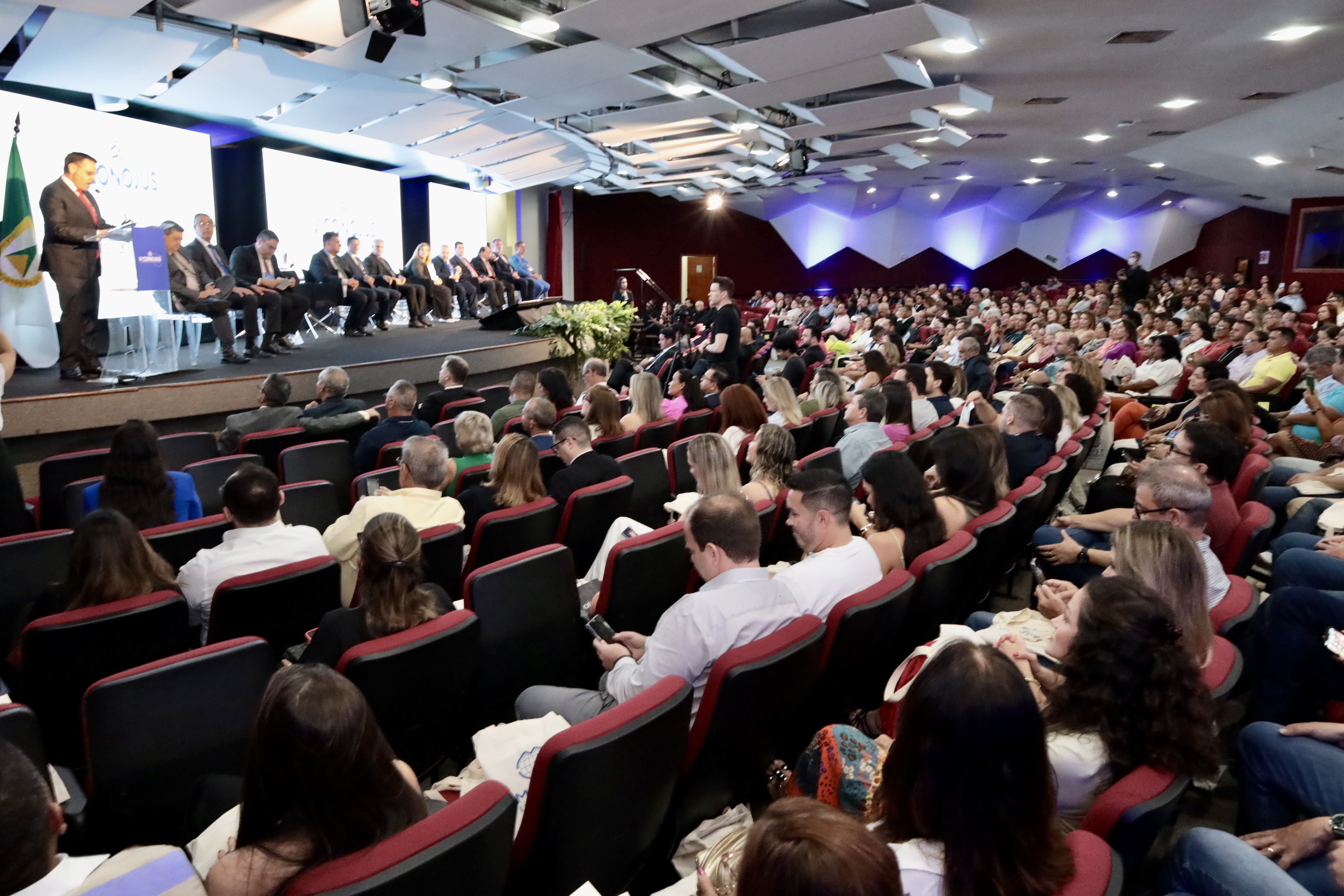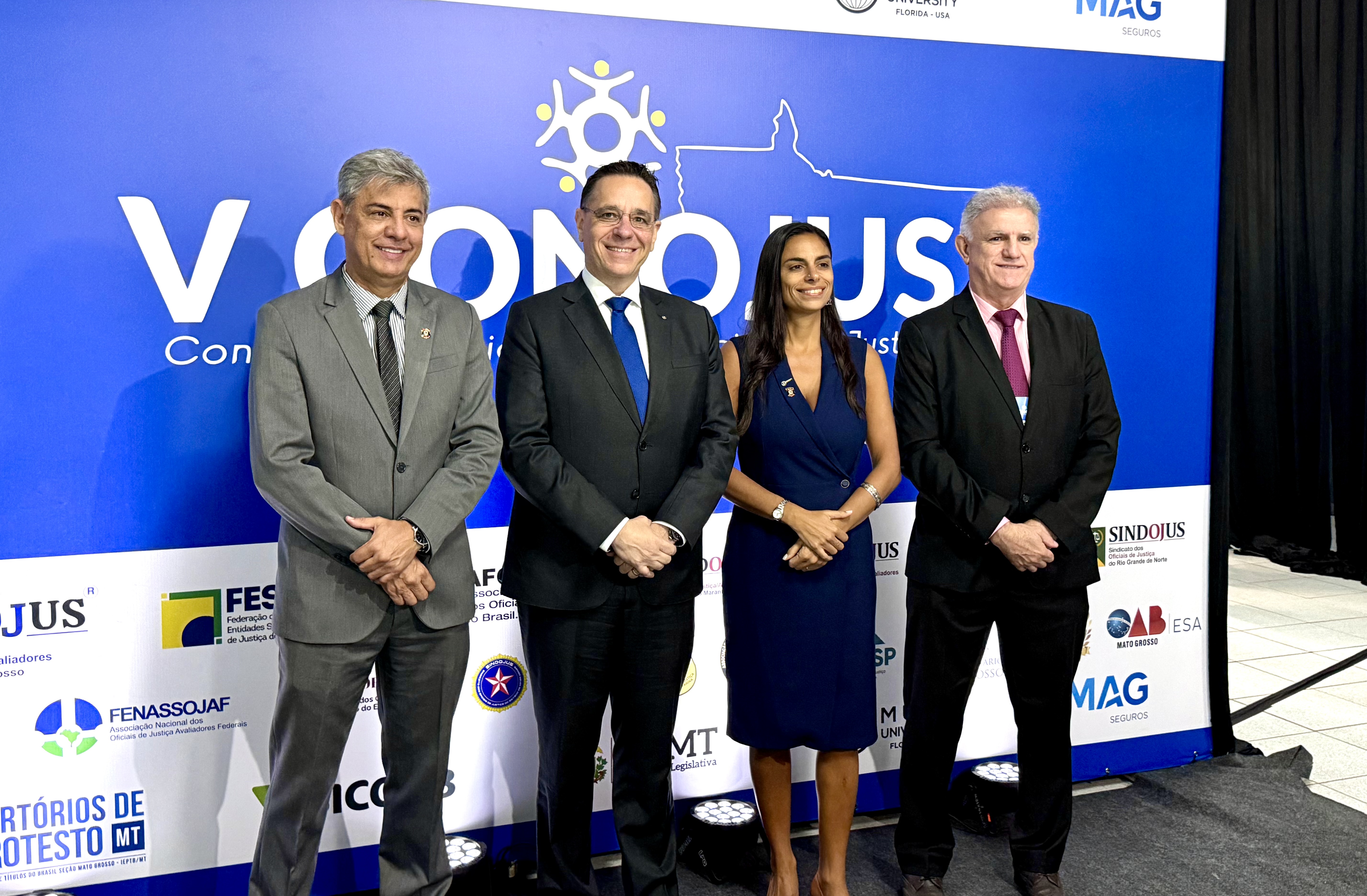
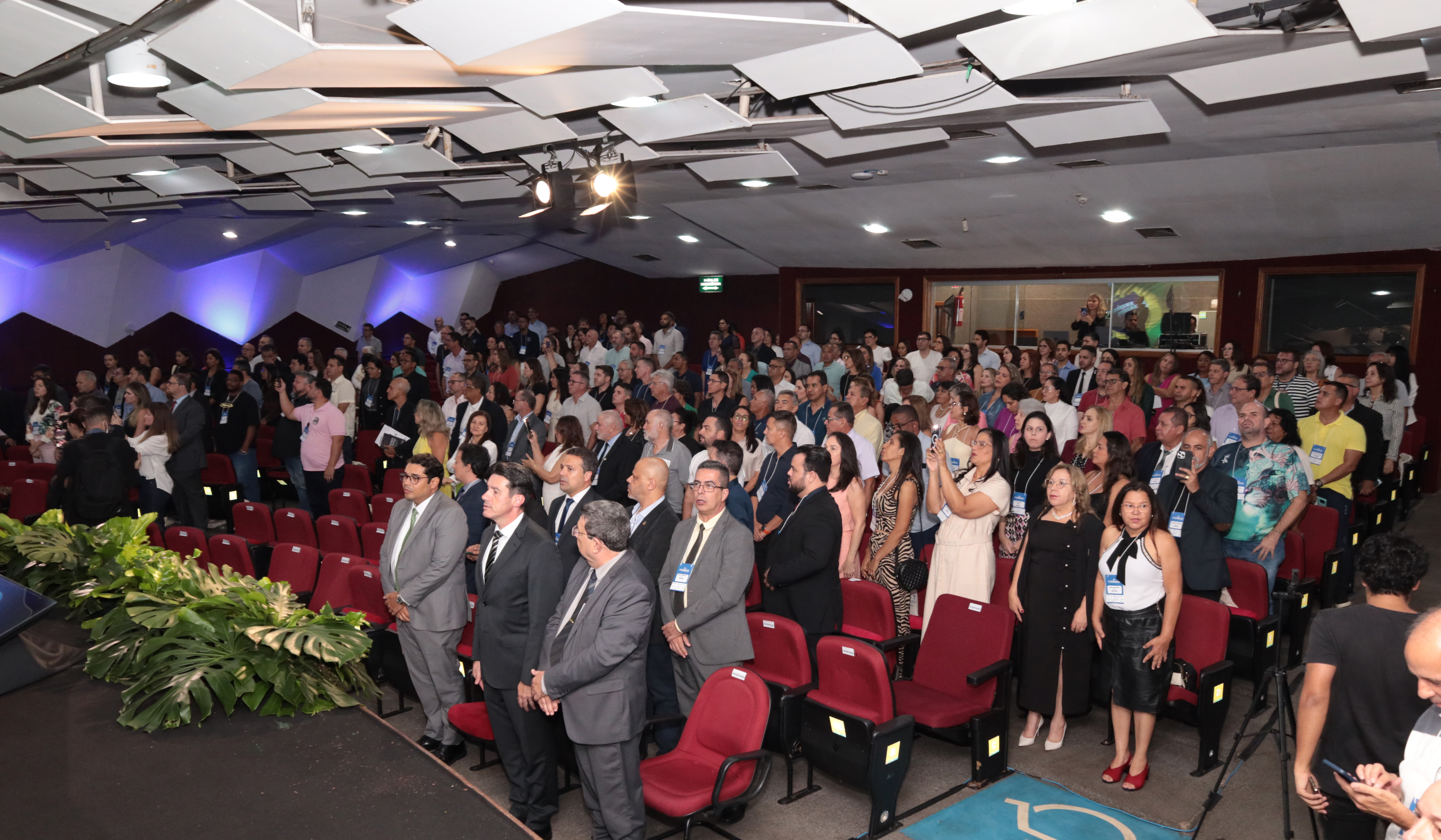
From March 26 to 28, 2025, the city of Cuiabá (capital of the State of Mato Grosso, Brazil) hosted the fifth edition of CONOJUS (Congresso Nacional dos Oficiais de Justiça), at the Centro de Eventos do Pantanal. The event brought together about 450 judicial officers, representatives of the judiciary and political stakeholders from across Brazil, fostering crucial discussions on the evolving role of judicial officers in the justice system.
UIHJ was represented by Marc Schmitz, president, and Malone Cunha, member of the board.
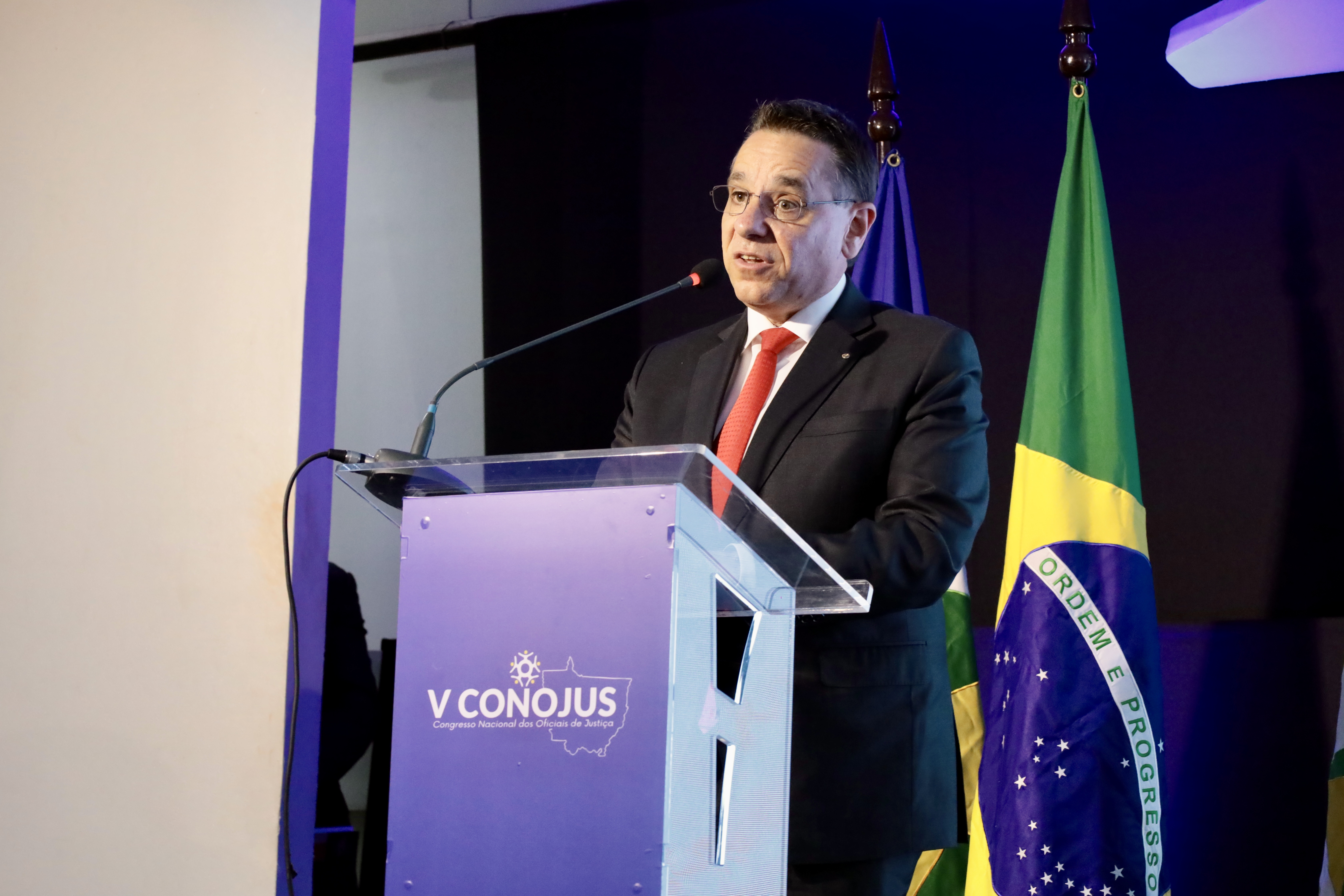
The congress opened on the evening of March 26 with an official ceremony that marked the beginning of the event. UIHJ President Marc Schmitz delivered a speech on the occasion, extening greetings and best wishes from the International Union of Judicial Officers to all participants.
A highlight of the first night was the launch of the book „Oficialato da Justiça“, celebrating the profession and its significance. The evening concluded with a cocktail and a cultural presentation, creating a warm and engaging atmosphere for networking and reflection.
On March 27, the program began with the theme Judicial Officer as an Intelligence Agent, a panel that featured Marcello Terto (Counselor of CNJ), Eleandro Alves (President of Sindojus-GO), and Steven Couto Simom (Judicial Officer of TJ/MT), with mediation by experienced professionals in the field. This was followed by a session on the impact of artificial intelligence on the legal sphere, with thought-provoking contributions from Ulysses Rabaneda, André Reis Lacerda, and Edson Alvino.
The morning also included a presentation on the General Data Protection Law (LGPD), led by Velencie Dias de Almeida (Director of ETNOR) and Marcos Antônio Dettlof, emphasizing the importance of data privacy in judicial operations.
In the afternoon, discussions turned to the protection of women and the role of judicial officers in enforcing protective measures. Speakers Alice Bianchini and Elcinea Bonfim offered powerful insights into the urgency and responsibility that judicial officers carry in combating gender-based violence.
Another important panel focused on the connection between judicial officers and society, underscoring their function as agents who link the judiciary with the public. Participants included Jorge Luiz Tadeu (TJ/MT Judge), Emerson Caiongo (TJ/MT Judge), and Ulisson Wlayner (Judicial Officer of TJ/MT). To close the day on a lighter note, attendees enjoyed a stand-up performance by comedian Fábio Lins.
The final day of the congress, March 28, opened with a presentation on moral and psychological harassment, delivered by Lisa Sobral and mediated by Mineri Costa. This was followed by a timely panel on the role of judicial officers as mediators and conciliators, featuring Manoel Duroud and Uendel Lacerda.
In the afternoon, political advocacy took center stage with a panel on the Parliamentary Front of Judicial Officers in Brazil, with speakers such as Coronel Meira and João Batista Fernandes, reinforcing the importance of institutional representation in advancing the category’s interests.
The discussions continued with a roundtable on the role of entities representing judicial officers, involving leaders like João Batista Fernandes (Fesojus), Mariana Liria (Fenasojaf), Mario Medeiros Neto (Afojebra), and legal expert Belmiro Castro. The final talk, titled Configurados para Amar e Vencer (“Configured to Love and Win”) by Fernando Bacellar, inspired attendees with a motivational message on personal growth and resilience.
The congress concluded with a prize draw and a festive closing ball, marking the end of three days of intense learning, networking, and reaffirmation of the vital role played by judicial officers in Brazilian society.
V CONOJUS was organized by SINDOJUS-Mato Grosso and supported by FESOJUS, FENASSOJAF, AFOJEBRA (all three members of the UIHJ), and several state-level organizations, reaffirming the collective commitment to strengthening the judicial officer profession and its essential contributions to the justice system.