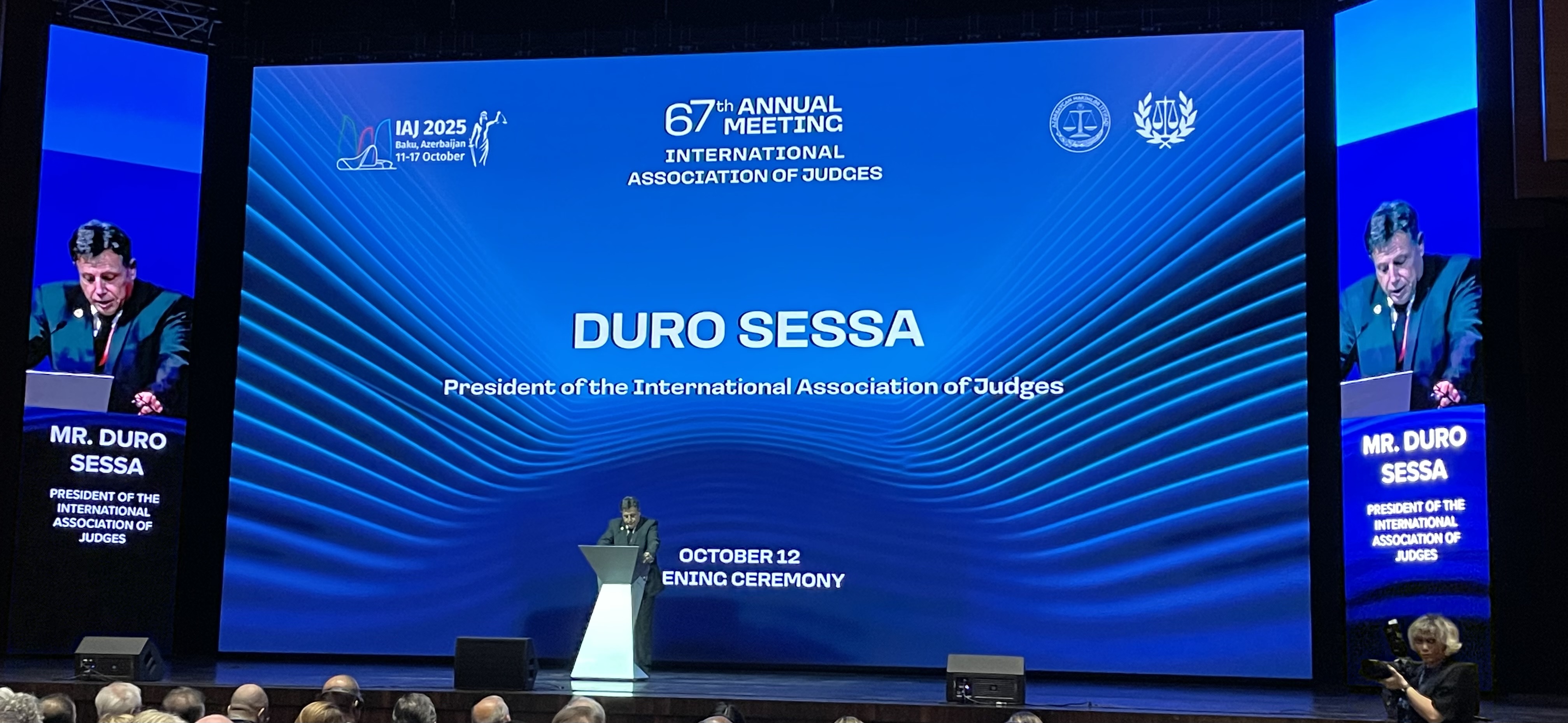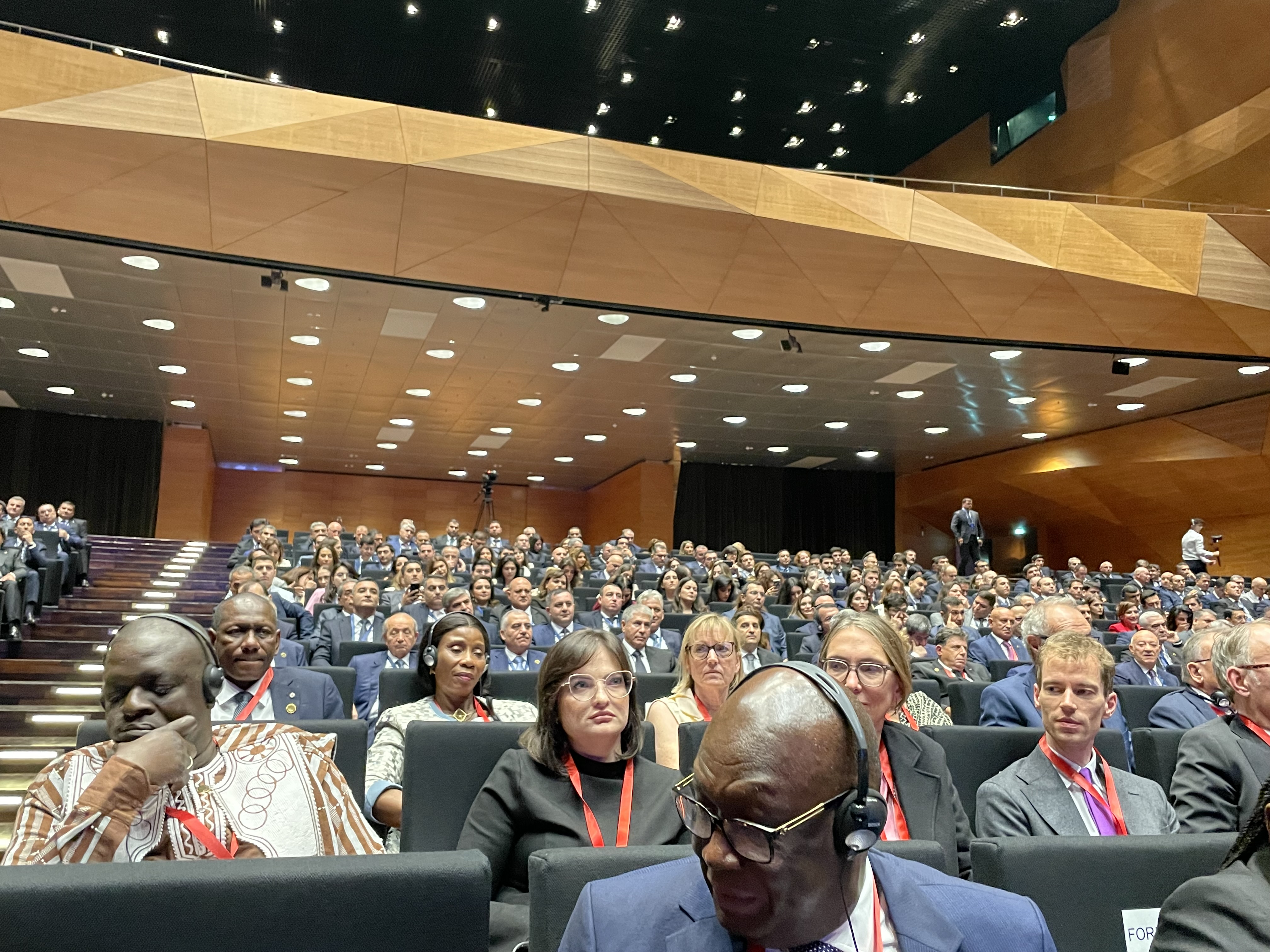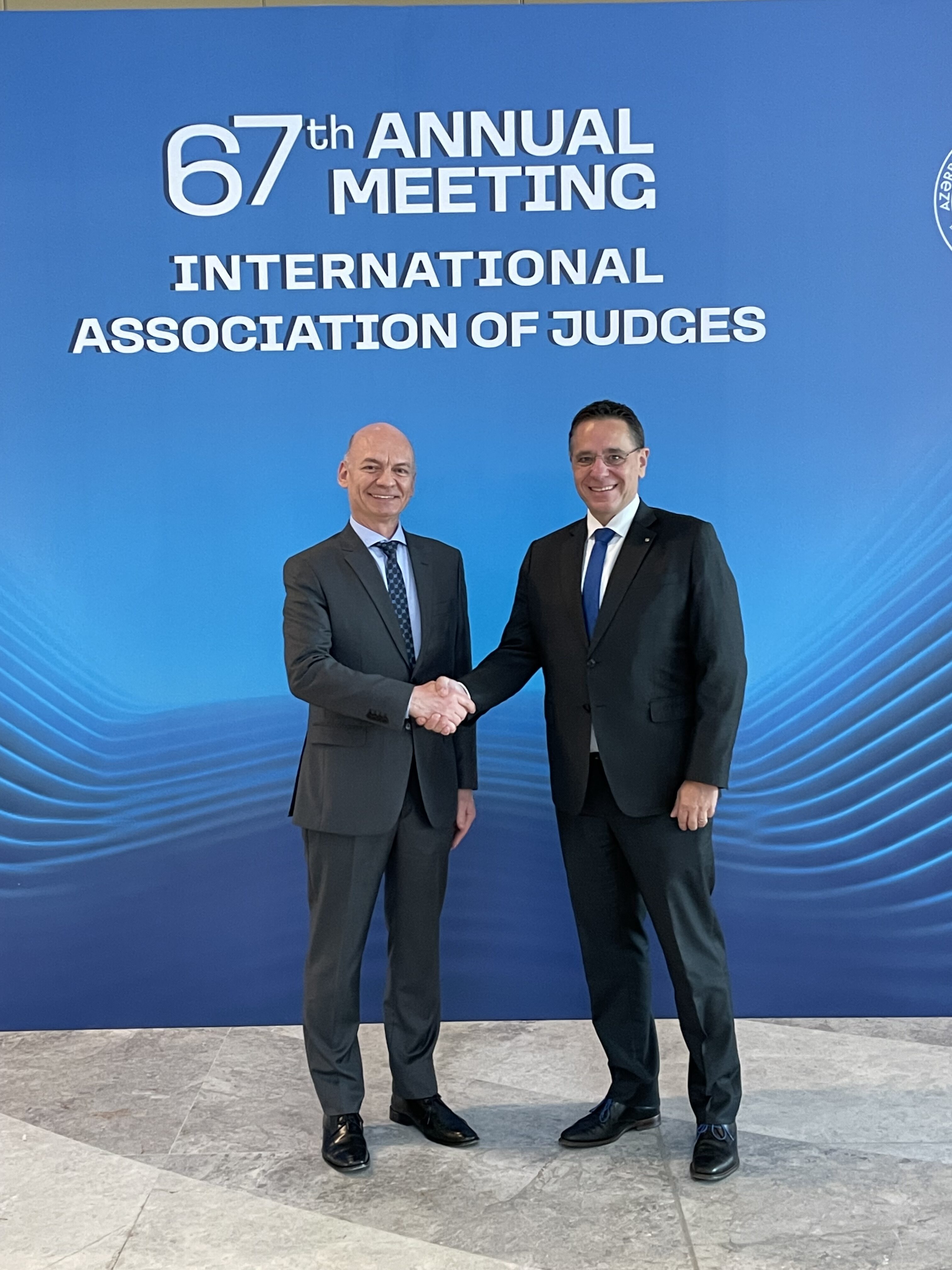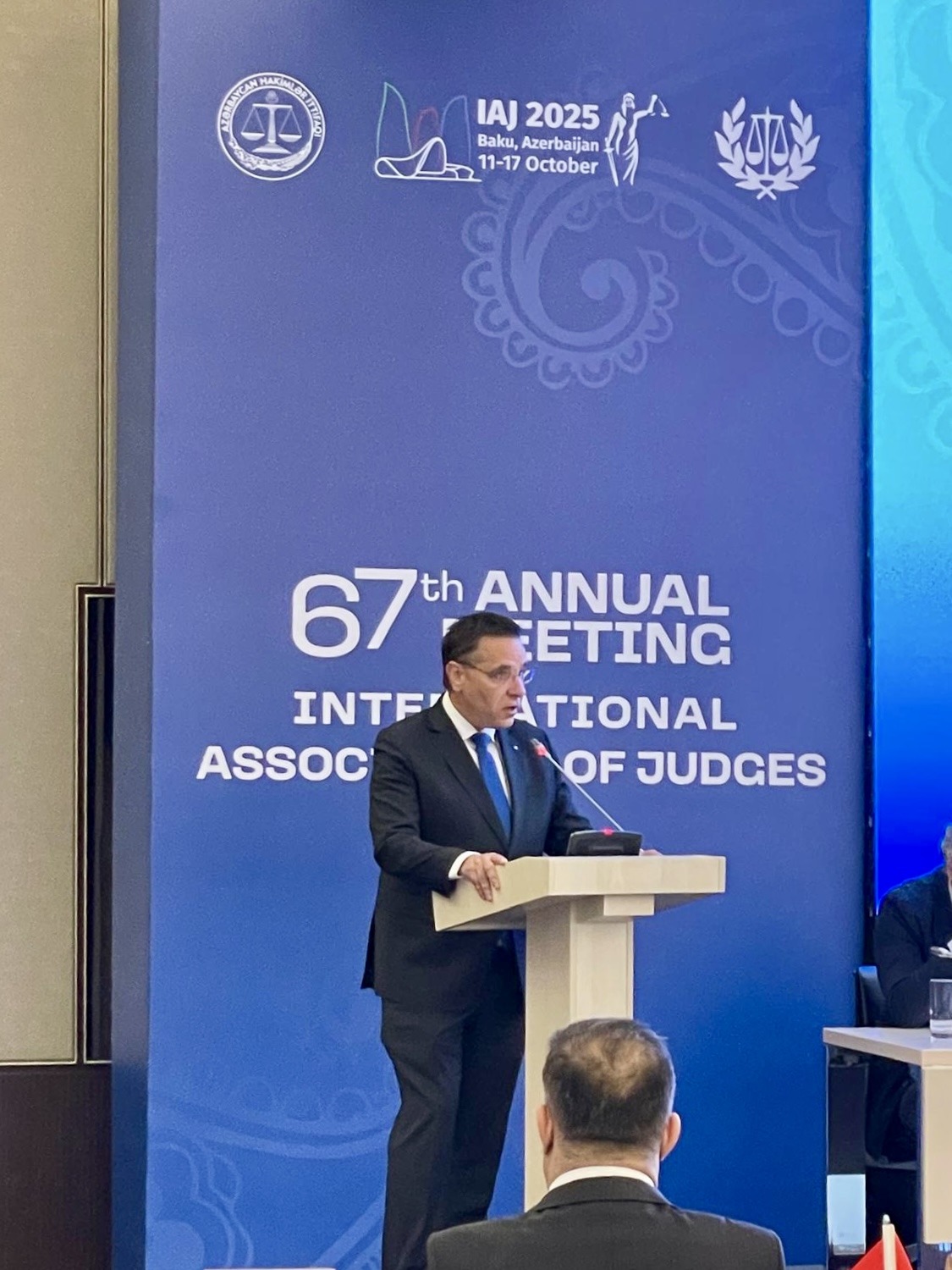
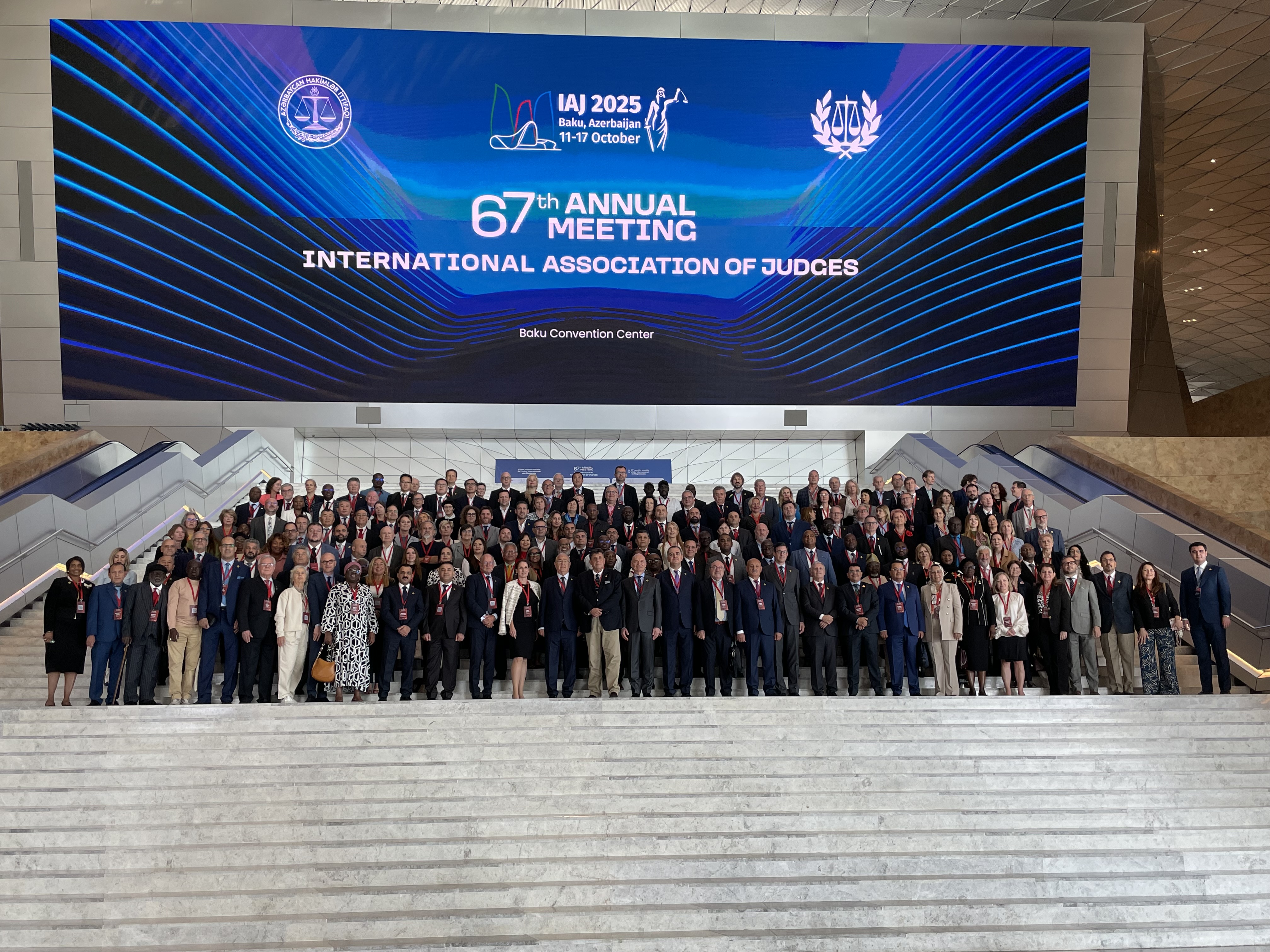
From 11 to 17 October 2025, the International Association of Judges (IAJ) held its 67th Annual Meeting in Baku, Azerbaijan, hosted by the Azerbaijan Union of Judges.
The event gathered representatives of the judiciary from around the world and reaffirmed the importance of dialogue and cooperation between judicial institutions at the international level.
The opening ceremony took place on 12 October at the Baku Convention Center, in the presence of high dignitaries, including the Chief Justice of the Supreme Court and Chairman of the Judicial-Legal Council, Mr. Inam Karimov, and the Minister of Justice, Mr. Farid Ahmadov. In their addresses, the speakers highlighted the crucial role of the judiciary in safeguarding the rule of law and ensuring citizens’ trust in justice.
Throughout the week, judges from all continents participated in the Central Council meetings, study commissions, and an international conference. The event was also marked by the exhibition “Judge robes and other symbols of the judiciary from around the world”, celebrating the diversity and heritage of judicial traditions.
On 13 October 2025, Marc Schmitz, President of the International Union of Judicial Officers (UIHJ), had the honor of delivering a greeting speech at the opening of the first session of the Central Council of the IAJ. In his address, he emphasized the natural and indispensable relationship between judges and judicial officers, recalling that while judges pronounce the law, judicial officers give effect to it – both together forming the two essential pillars of the rule of law.
President Schmitz also addressed the major transformations brought by digitalization and artificial intelligence in the field of justice. He highlighted both the opportunities and challenges posed by new technologies, underlining that while they may enhance efficiency and transparency, they must never undermine fundamental guarantees such as judicial independence, data protection, and the right to a fair trial. He reaffirmed that “justice is, and must remain, profoundly human,” stressing that no algorithm can replace human conscience, empathy, and moral responsibility.
In the spirit of cooperation and foresight, Marc Schmitz proposed the creation of an interprofessional working group on the use of artificial intelligence in justice, bringing together judges, judicial officers, lawyers, notaries, and court administrators. The goal of this initiative would be to explore ethical standards, identify best practices, and ensure that the digital transformation of justice remains firmly guided by the principles of humanity, fairness, and accountability.
On 14 October 2025, the Baku Convention Center hosted an international conference on the topic “Relations between the Judiciary and the Two Other Powers of the State.” This central theme invited reflection on the delicate balance between the independence of the judiciary and its interaction with the legislative and executive branches. Speakers emphasized that while judges must remain free from external influence, effective governance requires institutional cooperation to ensure that the rule of law is not only proclaimed but effectively applied. The debate also highlighted that in many parts of the world, judicial independence continues to face political, financial, or administrative pressures, and that the international community must remain vigilant in defending this cornerstone of democracy.
On 14 October 2025, Mr. Walter Barone was elected as the new President of the International Association of Judges, succeeding Mr. Duro Sessa. The UIHJ warmly congratulates President Walter Barone on his election and expresses its firm commitment to continuing and deepening cooperation with the IAJ in the promotion of shared values of justice, independence, and ethical innovation.
Through its participation in this major international event, the UIHJ reaffirmed its deep attachment to interprofessional dialogue and global judicial cooperation. By standing together – judges, judicial officers, and all actors of justice – our institutions can ensure that justice remains not only effective and modern but also profoundly human and faithful to its essential mission: to serve the people and uphold the rule of law.